
Latest Developments, April 3

In the latest news and analysis…

Aid and inequality
New data suggest aid actually increases the gap between rich and poor in recipient countries, according to Helmut Schmidt University’s Dierk Herzer and the Kiel Institute’s Peter Nunnenkamp.
“All in all, there is little reason for being optimistic and expecting foreign aid to be effective in alleviating poverty in recipient countries even if it had no discernible average growth effects. Calls on donors to strengthen the conditionality of aid, focus on countries with less corruption and better governance, and prevent leakage by stricter monitoring and closer involvement of the poor in aid delivery are insufficient even if such measures help restrict local rent-seeking. Better accountability is also required on the part of donors. Aid agencies tend to ignore their own incentive problems which prevent aid from reducing inequality. Public outrage in the North about corruption in the South abstracts from the selfish aid motives that lead donors to favour rich local elites. Overcoming the gap between the donors’ rhetoric on pro-poor growth and inequality-increasing aid allocation is no easier than overcoming rent-seeking and leakage in the recipient countries.”

Beyond aid
War on Want’s John Hilary argues it is time to “move beyond aid in any discussion of social and economic justice” and calls for a “radical reorientation” of the global economy towards a system that is not stacked in favour of rich countries.
“Sadly, the millennium development goals agreed in 2000 drew attention away from this pressing agenda. By focusing on the symptoms of human poverty rather than its underlying determinants, the goals have arguably diverted attention from the real business of development. Reclaiming that agenda will be a key part of moving the debate forward beyond 2015.
But perhaps the greatest problem with aid is that it perpetuates the colonial myth that the countries of the global south require ‘our’ intervention to save them from themselves.”

Provoking piracy
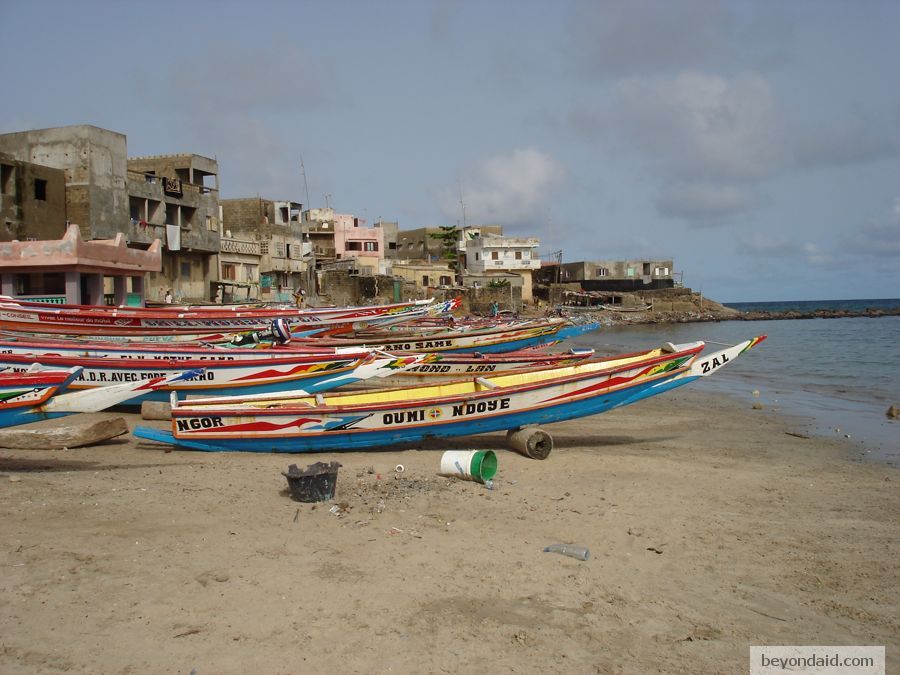
The Guardian quotes a Senegalese fisherman who suggests overfishing by foreign boats off Senegal’s coast will lead to violence if left unchecked.
“The catches are already down 75% on 10 years ago because of the foreign fishing boats. They destroy our gear. If this goes on there will be a catastrophe. Until now we haven’t taken any direct action against the foreign fishermen. Once we took the captain from one of the vessels and we beat him around the balls.
For sure, in 10 years time people will go fishing with guns. They are desperate. When people had enough to eat and drink, Senegal was a calm country. As the situation becomes more difficult it will become more and more like Somalia. We will fight for fish at sea. If we cannot eat, what do you expect us to do?”

New paradigm
The UN News Centre reports that UN Secretary General Ban Ki-moon has said a new economic model is necessary in order for sustainable development to become possible.
“ ‘Gross National Product (GDP) has long been the yardstick by which economies and politicians have been measured. Yet it fails to take into account the social and environmental costs of so-called progress,’ Secretary-General Ban Ki-moon said in his remarks at a high-level meeting at UN Headquarters in New York.

‘We need a new economic paradigm that recognizes the parity between the three pillars of sustainable development. Social, economic and environmental well-being are indivisible. Together they define gross global happiness,’ the Secretary-General told the meeting’s participants.”


Affirmative action ban
The Associated Press reports that a US federal court has upheld California’s ban on university admission policies that take race, ethnicity or gender into consideration.
“At least six states have adopted bans on using affirmative action in state college admissions. Besides California and Michigan, they include Arizona, Nebraska, Oklahoma, and Washington.
Advocates of affirmative action say such bans lead to the exclusion of minority students and less campus diversity.
In California, the year after ban was adopted, the number of black, Latino and Native American students at the University of California’s most prestigious campuses — Berkeley and Los Angeles — plummeted by 50 percent, according to the plaintiffs cited in the court opinion.”

Happy science
Columbia University’s Earth Institute has released the first edition of the World Happiness Report, in which it explains the “new science of happiness.”
“Over time as living standards have risen, happiness has increased in some countries, but not in others (like for example, the United States). On average, the world has become a little happier in the last 30 years (by 0.14 times the standard deviation of happiness around the world).”

EU transparency
The Tanzania Extractive Industries Transparency Initiative’s Bishop Stephen Munga argues that the EITI is useful but limited.
“It provides information at a national level, but does not enable communities to know how much wealth was generated in their locality and should therefore be returned to them. It is also voluntary. Governments decide whether to sign up. Only 35 have done so, leaving dozens of resource-rich countries with no publically available information.
This is why we need robust EU legislation revealing information at project level and published in all countries where EU companies work. Information must be relevant to local communities and attributed to the projects in their area. If not, legislation will simply not achieve its intended aim.”

Food racism
Le Monde reports on the debate in Austria over attempts to change traditional food names that “perpetuate racial prejudice.”
“The rightwing press was quick to jump on the story. Would it be necessary to change ‘Moor in a shirt’ to ‘Othello,’ asked the Kronen Zeitung tabloid, always eager to ridicule political correctness, while a commentator with the daily Die Presse slammed the ‘paternalistic lobby’ and the ‘professional indignants.’

‘Words are a key part of collective identity,’ counters SOS-Mitmensch’s Alexander Pollack. ‘And Austrians proved that by insisting, when they joined the EU, on keeping their own food names, notably for vegetables. If potatoes [erdäpfel in Austria, kartoffel in Germany] are taken so seriously here, the fight for human dignity and respect for others must be too.’” (Translated from the French.)

Latest Developments, March 19

In the latest news and analysis…

Arms stats
The Stockholm International Peace Research Institute has released new statistics indicating the international arms trade increased by 24 percent in 2007-2011 compared to previous five-year period, with the usual suspects still dominating the market.
“The five biggest suppliers of major conventional weapons in the period 2007– 11 were the United States, Russia, Germany, France and the United Kingdom. The USA and Russia remained by far the largest exporters, accounting for 30 per cent and 24 per cent of all exports, respectively. The top 5 suppliers accounted for 75 per cent of exports of major conventional weapons in the period 2007–11, compared with 78 per cent for the same five suppliers in the period 2002–2006.”

Apple dividend
KPCC’s Mike DeBord suggests Apple’s decision to reduce its cash surplus by paying its shareholders a quarterly dividend is both morally and strategically questionable.
“So when you think about it, Apple’s cash hoard has really come from extracting profits from its Asian contract manufacturers, who support Apple’s 30-plus profit margins by slashing their own; and by extracting profits from the likes of Verizon and AT&T, who have to subsidize customer purchases of ex-pen-sive iPhones. For the moment, Foxconn and American’s biggest wireless providers are willing to accept a redistribution of wealth from their balance sheets to Apple’s. But you have to wonder how long that will last — especially if people like [ValueWalk’s Paul] Shea are right and the post-Jobs Apple shifts its focus from product innovation to the care and feeding of shareholders (more than 70 percent of who are big institutional investors and hedge funds).”

Grim forecast
In a blog post announcing the release of a new environmental outlook to 2050, the Organisation for Economic Co-operation and Development’s Patrick Love writes that “we’re all doomed.”
“The [greenhouse gas] mitigation actions pledged by countries in the 2010 Cancún Agreements at the UN Climate Change Conference will not be enough to prevent the global average temperature from exceeding the 2C threshold, unless very rapid and costly emission reductions are realised after 2020.
Projections like these are probably familiar to most people interested in environmental issues, but other figures in the book may prove more of a shock, notably concerning health. We may be damaging the environment, but it’s killing us. Today, unsafe water kills more people than all forms of violence, but air pollution is set to become the world’s top environmental cause of premature mortality, overtaking dirty water and lack of sanitation.”

Dam guidelines
The Guardian reports that new voluntary guidelines for assessing the impacts of large hydroelectric dams are gathering support from corporations, while critics cry “greenwash.”
“Zachary Hurwitz, policy programme coordinator at International Rivers, said the protocol could create opportunities for dam builders to make sustainability claims while potentially undermining legislative and civil society-led efforts to hold them accountable for the social and environmental impacts of their projects.
‘There are ways to better regulate dam building,’ he said. ‘It is by the legislative process, through harmonising-upwards country regulatory systems in order to truly come to a global binding standard, with the ability to penalise developers.’ ”

Trayvon Martin
GlobalGrind.com’s Michael Skolnik writes about last month’s fatal shooting of an African-American teenager in a Florida gated community, arguing that “the rights I take for granted [as a white American] are only valid if I fight to give those same rights to others.”
“I got a lot of emails about Trayvon.  I have read a lot of articles.  I have seen a lot of television segments.  The message is consistent.  Most of the commentators, writers, op-ed pages agree.  Something went wrong.  Trayvon was murdered.  Racially profiled. Race. America’s elephant that never seems to leave the room. But, the part that doesn’t sit well with me is that all of the messengers of this message are all black too.  I mean, it was only two weeks ago when almost every white person I knew was tweeting about stopping a brutal African warlord from killing more innocent children.  And they even took thirty minutes out of their busy schedules to watch a movie about dude.  They bought t-shirts.  Some bracelets. Even tweeted at Rihanna to take a stance.  But, a 17 year old American kid is followed and then ultimately killed by a neighborhood vigilante who happens to be carrying a semi-automatic weapon and my white friends are quiet.  Eerily quiet. Not even a trending topic for the young man.”

Abolishing tax havens
The UN Millennium Campaign’s Charles Abugre writes that corrupt government officials are not the main culprits behind illicit capital flight from Africa, an estimated 65-70 percent of which is attributable to “commercial activities, especially through trade mis-pricing of goods”.
“Africa is experiencing economic growth, and for the increasing wealth to be channelled to public services, development and the achievement of the millennium development goals by 2015, it is urgent the problem of tax havens as a conduit for illicit outflows is addressed. The high-level panel set up by the African Union, the African Development Bank and the UN Economic Commission for Africa, and chaired by former South African president Thabo Mbeki, is a significant step forward – and testifies to the importance of this issue for Africa’s development. The ball is now in the court of the rich countries.”

A world bank
It is time for the US to give up its unwritten right to appoint World Bank presidents in favour of a more open, meritocratic process, according to François Bourguignon, Nicholas Stern and Joseph Stiglitz, all of whom held senior positions at the bank in the past.
“The developed countries have declared the importance of an ‘open, transparent and merit-based process’ many times. They have recognised the importance of trust, credibility and collaboration in overcoming global challenges, particularly that of poverty. Yet when the moment comes for decision, they cannot resist the temptation to perpetuate the monopoly. This is not only hypocritical, it also destroys the trust and spirit of collaboration needed to manage the profound problems facing the world.”

Lundins fight back
The Local reports the sons of Lundin Group founder Adolf Lundin have responded to allegations their company consists of “opportunistic, dictator-hugging businessmen” who show little regard for human rights in their search for natural resources.
“The allegations refer to alleged human rights abuses in connection with oil exploration in southern Sudan between 1997 and 2003.
Magnus Elving of the International Prosecution Chamber in Stockholm (Internationella åklagarkammaren i Stockholm) is investigating claims made in a report entitled “Unpaid Debt” framed by an umbrella group named the European Coalition on Oil in Sudan (ECOS) and present in 2010.
The report alleges that Sudanese troops, in collaboration with militias, attacked and drove away the civilian population in areas where companies could drill for oil.”

Latest Developments, February 9

In the latest news and analysis…

Accountability deficit
The School of Oriental and African Studies’ Michael Jennings argues there are few consequences for international NGOs that fail to deliver on their humanitarian promises or, in some cases, do actual harm to the people they have pledged to help.
“The question of accountability has often looked to how NGOs answer to donors or to the national governments of countries in which they are operating. From a financial or legal perspective, this makes perfect sense. NGOs should account for the money they spend as contracted agents of donors. And they should, of course, be working within the parameters of national regulatory frameworks and laws (although the fact that NGOs themselves often sit on the committees that draw up such regulatory systems is troubling).

The best NGOs do think about how they can be accountable to the communities and individuals with whom they work. But the issue is too important to be left to self-regulation. Development interventions involve change, and change can result in profoundly negative outcomes for some or many. Unintended as these negative consequences may be, those affected should be afforded a better means to hold to account development actors.”

Mining profits
Bench Marks Foundation’s John Capel writes that calls for increased investment in Africa rarely incorporate a discussion of “how this investment should be undertaken,” a shortcoming the Alternative Mining Indaba seeks to rectify.
“We believe there is a role for independent monitoring and evaluation and a role for community monitoring to hold mining corporations accountable.
But to do so we need independent funds to capacitate communities to engage with mining houses on a level playing field. To back this up we need an independent grievance mechanism, independent of the company, supported by an independent fund contributed to by mining corporations. It must be quick and easy to use, bring redress, be able to hold corporations accountable and must address any adverse impacts on communities.”

Arms control
The Inter Press Service reports on the continuing campaign for stricter controls on international weapons sales ahead of next week’s pre-negotiation meeting regarding the Arms Trade Treaty which is supposed to be finalized later this year.
“ ‘There is more control on the selling of bananas than there is on conventional arms,’ said Zobel Behalal, peace and conflicts advocacy officer for CCFD-Terre Solidare, a French-based Catholic NGO.
‘For us, this is a true scandal because states can do what they want without taking into account the impact on civilian populations,’ he told IPS.”

Immunity lost
Agence France-Presse reports Iraqi officials want to rein in private security contractors whose large number “negatively impacts the security situation in the country.”
“The firms ‘have to understand that … they don’t have free (movement) in the country. They have to follow the instruction, they have to hold the permit, a valid permit, and they are not allowed to violate the Iraqi laws.’
‘They are not exempted as before, and they are not getting any sort of immunity,’ [government spokesman Ali al-Dabbagh] said.
‘We do need them, definitely, we do need them, (and) we are not going to stop them, but definitely, we will limit their work,’ Dabbagh said.”

Living wage
The Phnom Penh Post reports on a push to quadruple the wages of Cambodian garment workers.
“[Asia Floor Wage] coordinator Anannya Bhattacharjee said the $281 calculation was based on a worker’s monthly nutritional needs according to figures obtained from governments and international institutions.
She added that such an increase would rely to some extent on clothing brands and retailers paying more for the finished product.
‘There is enough money in the global supply chain for brands to pay Cambodian manufacturers enough so that garment workers can earn that,’ she said.”

Down the toilet
A new World Wildlife Fund report suggests American consumers are contributing to the destruction of Indonesia’s rain forests by buying certain brands of toilet paper.
“In recent years, APP has greatly expanded into the U.S. tissue market, including through Paseo and Livi tissue products. Oasis Brands, which markets Paseo, announced in 2011 that Paseo had become the fastest-growing brand of toilet paper in the U.S.  Paseo and Livi are also marketed as ‘away-from-home’ products used in public restrooms in restaurants, office buildings, schools and hotels.”

Universal joy
The Center for Global Development’s Charles Kenny responds to Japanese calls to make happiness one of the Rio+20 Sustainable Development Goals with a more American plea to focus on the “right to pursue happiness.”
“Most differences in life satisfaction poll answers are due to inherited characteristics, while less than 3 percent can be explained by socioeconomic status, education, income, marital status, and religious commitment combined.  As I suggest in this CGD Essay, for a society to maximize average happiness poll answers, its most effective course would probably be to put everyone on an antidepressant-ecstasy cocktail and (given the strong genetic component of happiness poll answers) add in chemical sterilization for the naturally unhappy.  Is that really what we want out of a new round of Millennium Development Goals?”

Geography of trade
Drew University’s Fred Curtis and Rutgers’s David Ehrenfeld argue the end of globalization – or at least its considerable reduction – is nigh but they see as many opportunities as problems in the inevitable transition to more localized life.
“It is now critical for economic planners, laypersons and governments to recognise that long-term energy and climate realities will impose limits on the global movement of goods. Trade pacts, like the US-Korea Free Trade Agreement, and business models, like Walmart with its transoceanic supply chains, will make less sense as the foundations of global trade are undermined. This is not the result of either ideology or policy. Only when we accept these realities can we design and rebuild less vulnerable patterns of production and trade throughout the world. Nearly every country has existing examples of sound, regional development that can be used as models.”

Latest Developments, January 27

In the latest news and analysis…

Arms sale loophole
Foreign Policy’s Josh Rogin reports that, following congressional opposition to a proposed sale of US arms to Bahrain due to human rights concerns, the Obama administration is moving ahead with a repackaged sale without formally informing Congress or the public.
“Our congressional sources said that State is using a legal loophole to avoid formally notifying Congress and the public about the new arms sale. The administration can sell anything to anyone without formal notification if the sale is under $1 million. If the total package is over $1 million, State can treat each item as an individual sale, creating multiple sales of less than $1 million and avoiding the burden of notification, which would allow Congress to object and possibly block the deal.
We’re further told that State is keeping the exact items in the sale secret, but is claiming they are for Bahrain’s “external defense” and therefore couldn’t be used against protesters. Of course, that’s the same argument that State made about the first arms package, which was undercut by videos showing the Bahraini military using Humvees to suppress civilian protesters.”

Responsibility while protecting
Former Australian foreign minister Gareth Evans surveys the extent of the damage done to the “responsibility to protect” principle by disagreements over how NATO handled its Libyan intervention.
“The better news is that a way forward has opened up. In November, Brazil circulated a paper arguing that the R2P concept, as it has evolved so far, needs to be supplemented by a new set of principles and procedures on the theme of “responsibility while protecting” (already being labeled “RWP”). Its two key proposals are a set of criteria (including last resort, proportionality, and balance of consequences) to be taken into account before the Security Council mandates any use of military force, and a monitoring-and-review mechanism to ensure that such mandates’ implementation is seriously debated.”

WEF women
The Guardian’s Jane Martinson argues the World Economic Forum in Davos “has a woman problem.”
“Although the days are long gone when one female delegate was asked to leave an event because security assumed she must be a spouse without the required permit, the majority of the women in Davos are not there as participants. Only newcomers to Davos seem to consider this fact remarkable, with the odd feminist exception such as Helen Clark. The former prime minister of New Zealand turned administrator of the United Nations Development Programme called the female participation rate ‘pathetic’. The leader who appointed so many senior women to her cabinet that Benetton ran an airport advertising campaign welcoming visitors to the ‘women’s republic of New Zealand’ called for organisers to commit to the millennium development goal of 30% female participation by 2015. ‘Or why not next year? They should just go and look for the women. In one stroke, participation would go up.’ ”

Forgetting about poverty
Time’s Roya Wolverson argues that, with all the talk about inequality, absolute poverty seems to have dropped of the World Economic Forum’s radar.
“What’s missing in the WEF discussions is the perspective of the poor.  Unfair trade practices and poor working conditions in the developing world, issues that made it onto the WEF agenda a decade ago and keep rearing their ugly head, haven’t been raised at all. Instead, the conversation is acutely focused on the plight of the Western worker and his dwindling pension plan.”

Bad medicine
Intellectual Property Watch reports that the World Health Organization’s executive board has come up with a proposal for an international mechanism that would deal with  “counterfeit and substandard medical products” medicines without taking on thorny IP and trade issues.
“A contentious issue around counterfeits has been the suspicion on the part of some developing countries that concerns about counterfeit and substandard medicines are being purposely confused with trade in legitimate generic medicines from those countries. Removing intellectual property and trade from WHO discussions likely minimises the possibility of confusion.”

Bad money
Reuters reports on how difficult it is for financial regulators to overcome the client privacy provisions of Western banks in order to take action against “undesirable assets and clients.”
“ ‘Our current arrangements for the creation of trusts and the setting up of companies anonymously have created an environment which is permitting kleptocrats to move their loot around (and commit) tax evasion on a monstrous scale,’ said Anthea Lawson, head of the Banks and Corruption Campaign at Global Witness, a non-government organisation which campaigns against money laundering and corruption.
Those determined to hide money have numerous devices at their disposal: for example it is possible to establish an offshore company which belongs to an offshore trust behind which may be another trust, all spread across multiple jurisdictions and set up by an associate of a person on a sanctions list.”

War on finance
The Economist says that François Hollande, the French Socialist Party’s presidential candidate, has “declared war on global finance.”
“The financial industry, he said, had grown into a nameless, faceless empire that has seized control of the economy and society. To tackle the enemy and restore the French dream, Mr Hollande wants to separate banks’ ‘speculative’ activities from their lending arms. He would outlaw ‘toxic’ financial products, keep banks out of tax havens and ban stock options for all companies except start-ups.”

Tackling inequality
British Labour leader Ed Miliband lays out some proposals for a fairer economy.
“I support proposals for a financial transactions tax levied equally on the major trading centers from Hong Kong and Singapore to Wall Street and the City of London. The British government needs to show more leadership on this issue in Europe — and all members of G-20 need to help make it happen.
Britain loses billions of pounds in revenues because of outdated rules that allow our richest citizens to keep their money in off-shore tax havens. Tax authorities need to know about income and wealth hidden behind front companies, trusts and other complex financial products. If these rules cannot be changed by international agreement, progressive governments should go ahead and do it themselves.”

Latest Developments, January 11

In the latest news and analysis…

Rio+20 leak
The Guardian reports a leaked agenda for June’s Rio+20 conference suggests countries will be called upon to agree to 10 new sustainable development goals but overall, the meeting promises to be much less ambitious than the original earth summit.
“Unlike the 1992 earth summit when over 190 heads of state set in motion several legally binding environment agreements, leaders this time will not be asked to sign any document that would legally commit their countries to meeting any particular targets or timetables. Instead, they will be asked to set their own targets and work voluntarily towards establishing a global green economy which the UN believes will reduce poverty and slow consumption.”

Transforming governance
The Inter Press Service reports on growing calls for radical changes in global governance in order to address issues such as poverty and environmental destruction.
“ ‘We need to have a “constitutional moment” in world politics, akin to the major transformative shift in governance after 1945 that led to the establishment of the United Nations and numerous other international organisations,’ said Frank Biermann of VU University Amsterdam and director of the Earth System Governance Project.

Transforming international governance will be challenging since nation-states are almost entirely concerned with their own short-term interests, [Biermann] acknowledges. However, countries give up some of their power when they join the World Trade Organisation.
‘We ought to be able to do this for the protection of the planet and act as a community of nations,’ he said.”

Guardians of the future
The University of East Anglia’s Rupert Read argues that true democracy must take into account the interests of future generations, and to that end, he proposes the integration of  “guardians” into Britain’s existing parliamentary system.
“The members of this body would be selected by sortition, as is current practice for jury service, in order to ensure independence from present-day party political interests.
The Guardians would have a power of veto over legislation that were likely to have substantial negative effects for society in the future, the right to review major administrative decisions which substantially affected future people and the power to initiate legislation to preserve the basic needs and interests of future people.”

Immigration assistance
The Center for Global Development’s Michael Clemens argues the US, by tweaking its immigration policies, could provide significant assistance to earthquake-ravaged Haiti without spending any money or increasing the number of immigrants coming to its shores.
“First, the administration could reverse the current ban on Haitian participation in the U.S.’s largest employment-based visa program, the H-2 temporary low-skill work visa. All Haitians are currently ineligible to receive these visas. If even a few thousand Haitians at a time participated in that program over the next decade, it would generate more money for Haitian families than the entire U.S. infrastructure reconstruction allocation for Haiti. Fiscal cost: zero. It would even generate net positive U.S. tax revenue. Effect on Americans’ jobs: none. Removing the ban on Haiti would simply allow employers already seeking laborers to draw from Haiti instead of being limited to the 53 currently-eligible countries like Guatemala and Mexico.”

Acting together
Norwegian development and environment minister Erik Solheim argues “poverty is about politics” and its solutions lie beyond aid.
“As Norway’s minister for both the environment and development since 2007, I meet with other countries’ ministers with both portfolios, and it has come as a shock to see how the two groups lead such separate lives. Each has its own important agenda, its own analysis of the challenges ahead, its own strategic plans, and literally its own language. While each recognizes the importance of the other’s agenda, unless they talk and act together, neither group’s goals will be achieved.

We must be careful not to fool ourselves into believing that the MDGs can be achieved through development aid alone. The wider politics of poverty must be placed at the top of the international agenda, along with the three factors most critical to development: climate, conflict, and capital.”

Western corruption
Inuka Kenya Trust’s John Githongo argues rich countries have fallen behind their “developing” counterparts in terms of awareness of and mobilization against high-level corruption.
“We live in an increasingly multipolar world where graft is concerned. It’s the turn of the developing world to watch how the west handles fraud and corruption at the highest levels in their corporate and other sectors. I would like to argue that the organic youth-heavy movements in the west, such as Occupy Wall Street, are part of this shift, except the “c” word isn’t being used – yet. This is a pointer to what I predict the fight against corruption will look like in 2012.”

Social cohesion
Oxfam’s Duncan Green issues a “fuzzword alert” over social cohesion and critiques the treatment given to the term in a new Organisation for Economic Co-operation and Development report.
“Whenever a new idea becomes popular like this, the danger is that instead of looking afresh at what it contributes to our understanding of development, we just recycle our existing set of ideas and say ‘because of complexity/ social cohesion/ climate change, you should do exactly what we’ve being saying all along’. I think the OECD is in danger of going down that road in this report – building social capital, supporting social mobility, and promoting social inclusion are fine, but they were standard demands long before anyone started talking about cohesion. The more interesting question is what we should be doing that’s additional or different because of a social cohesion ‘lens’, and I didn’t find that here.”

Southeast Asian exceptionalism
Alpha International Consulting’s Seth Kaplan uses the example of Southeast Asia to question orthodox thinking on the prerequisites for economic development.
“Indonesia, for instance, reduced poverty from 60 percent in 1970 to 22 percent in 1984. Vietnam reduced it from 58 percent in 1993 to 14 percent in 2008.
Yet, the region does not meet the standard model for economic success, at least as defined by the World Bank and the rest of the Western development community. Governments have historically not been held in check by elections. Corruption is widespread. Governance has rated low on most indicators.”