Latest Developments, November 7

In the latest news and analysis…

Historic votes
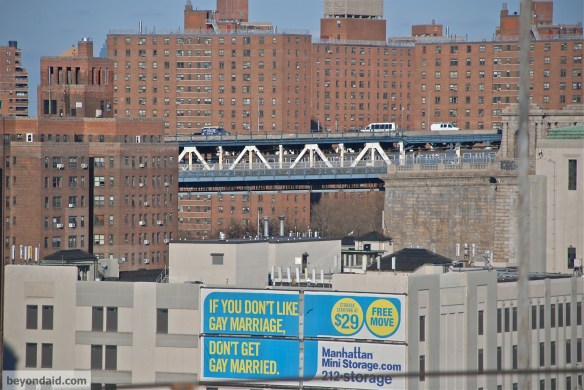
In addition to news of Barack Obama’s re-election to a second term as US president, the Associated Press reports that Maine and Maryland voted in favour of allowing gay marriage, and Colorado and Washington voted to legalize recreational use of marijuana:

“The outcome in Maine and Maryland broke a 32-state streak, dating back to 1998, in which gay marriage had been rebuffed by every state that voted on it.

The marijuana measures in Colorado and Washington set up a showdown with the federal government, which outlaws the drug.

The Washington measure was notable for its sponsors and supporters, who ranged from public health experts and wealthy high-tech executives to two of the Justice Department’s top former officials in Seattle, U.S. Attorneys John McKay and Kate Pflaumer.”

Observers threatened
KPBS reports that international election observers were told by state government officials to “stay away from polling sites” in Texas and Arizona:

“Texas election officials are threatening the observers with arrest if they show up at the polls.
For the last decade the United Nations-affiliated Organization for Security and Co-operation in Europe (OSCE) has directly observed elections in the United States — but not this Election Day in Texas or Arizona.”

Beyond ECOWAS
Agence France-Presse reports that non-African troops may take part in attempts to recapture northern Mali from armed groups:

“ ‘If African heads of state agree, there will be non-African troops on the ground to help Mali win back its territory,’ an African official taking part in the meeting of international experts told AFP on the last day of the conference.

He said that the number of troops sent into Mali by the Economic Community of West African States (ECOWAS) ‘could reach 4,000 instead of the planned 3,000’ and would be spread throughout the country.

The Bamako conference was attended by experts from ECOWAS, the European Union, African Union, United Nations and Algeria, who are helping Mali draw up a plan to be presented to the UN on November 26.
Another delegate told AFP that the UN is expected to finance the bulk of the military operation.”

Internationalized minds
The Overseas Development Institute’s Jonathan Glennie makes the case for “global public spending” to replace the current model of international aid:

“As important as any inevitably fraught architectural decisions is the communications value of this concept – the general public in all countries, rich, middle-income and poor, should quickly grasp and appreciate the idea of global public spending reversing the antagonism to ‘aid’. National public spending is widely accepted – only the most die-hard anti-statists oppose social safety nets for the poorest people, investment in research for new technologies, conservation, policing and so on. In a globalising world, it is only logical that we take that theory one step further.
Just as individual contributions are the price of living in a civilised society, so national contributions to the global pot could be the price of living in a prosperous and sustainable world.
The very reason that this vision is hard to achieve is what makes it so progressive and exciting. This way of thinking will only work insofar as human beings are able to internationalise their minds and think on a truly global, horizontal level, the project of progressives for centuries. This is a truly radical perspective, implying a kind of internationalism that is still only developing.”

Protection racket
The Guardian’s Seumas Milne questions the sincerity of UK Prime Minister David Cameron’s professed support for Arab democracy, given his current “trip to sell weapons to Gulf dictators”:

“Cameron went to the Gulf as a salesman for BAE Systems – the private arms corporation that makes Typhoon jets – drumming up business from the United Arab Emirates, Saudi Arabia and Oman, as well as smoothing ruffled feathers over British and European parliamentary criticism of their human rights records on behalf of BP and other companies.

This is effectively a mafia-style protection racket, in which Gulf regimes use oil wealth their families have commandeered to buy equipment from western firms they will never use. The companies pay huge kickbacks to the relevant princelings, while a revolving door of political corruption provides lucrative employment for former defence ministers, officials and generals with the arms corporations they secured contracts for in office.”

Planeloads of cash
Reuters reports that Guinea’s government is accusing mining firm BSG Resources of “flying in cash” in order to gain access to a major iron ore deposit:

“Guinea’s government has asked BSG Resources and its partners to respond to the accusations in the report, put together by a government technical committee. If the responses are not satisfactory, it could put their permits at risk, a source at Guinea’s mines ministry said.

‘During the period of the military regime in Guinea from 2009 to 2010, BSGR was engaged in a strategy to improve its relations with decision-makers by making regular payments to high military figures,’ the report said.
‘These payments were often distributed in cash, carried into the country in BSGR’s private jet,’ it said.”

Environment Conflict Day
The UN marked its annual International Day for Preventing the Exploitation of the Environment in War and Armed Conflict:

“Though mankind has always counted its war casualties in terms of dead and wounded soldiers and civilians, destroyed cities and livelihoods, the environment has often remained the unpublicized victim of war. Water wells have been polluted, crops torched, forests cut down, soils poisoned, and animals killed to gain military advantage.”

Ultimate control
ECONorthwest’s Ann Hollingshead argues that the best way rich countries can help poor ones achieve the Millennium Development Goals in tough economic times is to promote “domestic resource mobilization” by cracking down on illicit financial flows:

“Most people would likely agree that the optimal, most sustainable way to lift developing countries out of poverty and achieve the Millennium Development Goals is to help them help themselves. When it comes to the transparency initiatives I outlined above, while they are the ones most hurt by harmful financial practices, it is not the developing countries that have the ultimate control over their implementation. Participation from developed countries will make or break the effort.”

Latest Developments, October 18

In the latest news and analysis…

Commitment to development
The Center for Global Development’s David Roodman and Julia Clark describe some of the changes to the latest edition of the Commitment to Development Index, which ranks rich countries “on how much their governments’ policies and actions support global prosperity”:

“Last year the troop surge in Afghanistan lifted the United States to first place on security. The CDI rewarded this military move because the U.N. Security Council continued to endorse the foreign intervention in Afghanistan. We decided in 2012 to impose an additional criterion for inclusion: an operation also needs to be reasonably describable as primarily intended to help the citizens of the country in question. The war in Afghanistan does not mean that test in our judgment. The 2011 intervention in Libya does.
The conception of ‘security’ has expanded beyond the use of force. Countries are now rewarded for participating in international security arrangements such as the International Criminal Court and Ottawa Treaty banning anti-personnel land mines.”

Setting priorities
Olivier De Schutter, the UN special rapporteur on the right to food, sketches out his vision of a “food security first” approach to biofuel development:

“The best practice cases of small-scale sustainable biofuel production may not be geared for exports. This is more than a coincidence: once the primary interest of agricultural systems becomes the cheap, bulk production of export commodities, the positive outcomes of smallholder engagement and intercropping of local staples are always likely to be lost.
The Institute for European Environmental Policy estimated that, to reach its initial 10% target for renewables in transport fuels, the EU would have had to import 41% of its biodiesel and 50% of its ethanol needs by 2020. So even with lower targets, dependence on imports – and therefore pressure on the structure of farming systems in the global south – are always the likely outcome of EU biofuel mandates.”

Drones over Yemen
Reuters reports that a US drone has killed nine suspected al Qaeda members in Yemen, based on eyewitness accounts of “six charred bodies and the scattered remains of three other people”:

“While Washington usually avoids comment on the strikes in Yemen, the UK-based Bureau of Investigative Journalism, which tracks U.S. operations, says as many as 56 civilians have been killed this year by drones.
Many Yemenis complain the U.S. focus on militants is a violation of sovereignty that is driving many towards al Qaeda and diverting attention from other pressing issues such as unemployment, corruption, water depletion and economic revival.”

Drone journalism
New York Times public editor Margaret Sullivan writes that her paper is not doing enough to inform readers about US drone policy:

“Since the article in May, its reporting has not aggressively challenged the administration’s description of those killed as ‘militants’ — itself an undefined term. And it has been criticized for giving administration officials the cover of anonymity when they suggest that critics of drones are terrorist sympathizers.
Americans, according to polls, have a positive view of drones, but critics say that’s because the news media have not informed them well. The use of drones is deepening the resentment of the United States in volatile parts of the world and potentially undermining fragile democracies, said Naureen Shah, who directs the Human Rights Clinic at Columbia University’s law school.
‘It’s portrayed as picking off the bad guys from a plane,’ she said. ‘But it’s actually surveilling entire communities, locating behavior that might be suspicious and striking groups of unknown individuals based on video data that may or may not be corroborated by eyeballing it on the ground.’ ”

Paris massacre
France 24 reports that French President François Hollande spoke of “bloody repression” as he marked the 51st anniversary of the killings of Algerian protesters by Paris police:

“On that fateful day, French police – under the leadership of Paris prefect Maurice Papon – brutally crushed peaceful demonstrations of Algerian anti-war protesters who had gathered in and around the French capital to protest against a French security crackdown in Algeria.

More than half-a-century later, the details surrounding the October 17 massacre – including the casualty figures – remain murky. A day after the demonstrations, the left-leaning French newspaper Libération reported the official toll as two dead, several wounded and 7,500 arrests. The death toll, however, was disputed by the [Algerian National Liberation Front (FLN)], which claimed that dozens were killed.  Many of the bodies were found floating in the River Seine.”

Bribe banking
The Sunday Times reports that British defence firm GPT used the UK’s biggest bank to funnel millions in alleged bribes to Saudi officials:

“HSBC accounts in London and New York were used to provide the alleged kickbacks as part of a money-laundering scheme. It was operated by the defence company to channel cash into private company accounts in the Cayman Islands.
It is claimed the payments form part of a total £72m in sweeteners paid by GPT Special Project Management to a Saudi prince who is a close relative of the ruler, King Abdullah.
The disclosure will raise fresh questions about HSBC, which was recently implicated by the US authorities in the laundering of billions of dollars for drugs barons and terrorists.”

Asset seizure
Reuters reports that Ecuadorean plaintiffs say a court has given them permission to seize $200 million of assets belonging to oil giant Chevron:

“The plaintiffs from villages in the oil-rich Amazon won an $18.2 billion case against the oil giant over claims that Texaco, bought by Chevron in 2001, contaminated the area from 1964 to 1992. Damages were increased to $19 billion in July.
Among the assets ordered turned over are $96.3 million that Ecuador’s government owes Chevron, money held in Ecuadorean bank accounts by Chevron, and licensing fees generated by the use of the company’s trademarks in the country, the plaintiffs said.”

Beyond aid targets
The Guardian reports that France’s development minister says he plans to focus more on “policies with the potential to help or hurt poor countries” than on traditional aid:

“On agriculture, particularly the common agricultural policy (CAP), which has been criticised for damaging the interests of poor countries despite reforms that have curbed the worst excesses, Canfin said France – where farmers have resisted CAP changes – would push for a ‘greener, more sustainable’ EU policy. On trade, he said France was willing to delay a 2014 deadline for completing economic partnership agreements (EPAs). EPAs are disliked by poor countries for forcing them to open their markes to competition that they cannot withstand. Canfin said France was willing to change the deadline to 2016, to allow more time to take into account the reservations of developing countries.”

Latest Developments, October 11

In the latest news and analysis…

Legal precedent
The BBC reports that four Nigerian plaintiffs are taking oil giant Shell to court in the Netherlands over alleged pollution:

“It is the first time a Dutch multinational is being put on trial in a civil court at home in connection with damage caused abroad.

If the farmers’ case is successful it could set a legal precedent, paving the way for thousands of other compensation claims from those affected by oil spills, says the BBC’s Anna Holligan in The Hague.”

Accredited poachers
Reuters reports that “EU-approved vessels” account for the bulk of illegal fishing off Sierra Leone’s coast:

“The European Union has set up regulations to prevent vessels involved in so-called illegal, unreported and unregulated (IUU) fishing from accessing European markets.
An 18-month investigation conducted by the Environmental Justice Foundation (EJF), however, documented a long list of abuses including fishing inside exclusion zones, using banned equipment, and transhipping fish illegally at sea.
The majority of cases involved ships accredited to sell their seafood at EU ports.”

Fighting transparency
The Hill reports that US oil and business groups are suing to overturn new rules requiring the extractive industry to disclose payments made to foreign governments:

“The lawsuit, filed Wednesday with the U.S. District Court for the District of Columbia, escalates a battle between industry and human rights groups over controversial transparency rules required under the 2010 Dodd-Frank financial reform law.

‘Secrecy around payments enables corrupt government officials and political elites to siphon off or misappropriate revenues for personal gain, rather than development. It has been said that ‘sunshine is the best disinfectant’ – this lawsuit begs the question, what are oil companies trying to hide?,’ said Jana Morgan, assistant policy adviser with Global Witness.”

Swiss arms
Swissinfo reports that Switzerland is adopting new rules aimed at preventing the re-export of “war material” to conflict zones after Swiss grenades sold to the United Arab Emirates were found in Syria:

“Buyers will have to declare that they will not export, sell, lend or donate the material, or pass it on in any other way to a third party abroad, without the agreement of the Swiss authorities.
Where there is seen to be a high risk of the material nevertheless being passed on to ‘undesirable’ end users, the relevant Swiss authorities can stipulate that they shall have the right to make ‘post shipment inspections’ on the spot.
Where large amounts of material is exported, the declaration is to take the form of a diplomatic note from the receiving country.”

Gloomy forecast
Maplecroft has released its Food Security Risk Index for 2013, according to which 75 percent of African countries are at high or extreme risk:

“ ‘Food price forecasts for 2013 provide a worrying picture,’ states Maplecroft’s Head of Maps and Indices Helen Hodge. ‘Although a food crisis has not emerged yet, there is potential for food related upheaval across the most vulnerable regions, including sub-Saharan Africa.’
A September report by Rabobank, a financial specialist in agro-commodities, estimates that prices of food staples could rise by as much as 15% by June 2013, resulting in record highs that will squeeze household incomes in many countries.”

Big loss
Bloomberg reports that the US Supreme Court has refused to intervene in a lawsuit that saw a judge in Ecuador impose a $19 billion fine on oil giant Chevron:

“Without commenting on the merits of the case, the U.S. Supreme Court today let stand a federal appeals court ruling that a New York trial judge exceeded his authority when he blocked a group of Ecuadorean farmers and Indians from seeking to collect the $19 billion award anywhere in the world.

The justices’ action, although it doesn’t address the substance of the case, effectively eliminates one avenue for Chevron to avoid liability. The company has refused to pay the judgment in Ecuador. Since Chevron does not have any bank accounts or other assets in Ecuador, the plaintiffs have now filed separate collection actions seeking liens against Chevron assets in Brazil and Canada.”

Mass firings
CNN reports that mining company Gold One has fired 1,400 striking workers at a South African mine:

“It’s the latest twist in a wave of sometimes-violent labor unrest that has wracked South Africa’s mining sector — the country’s biggest industry — for nearly two months. Another company, Anglo-American Platinum, fired about 12,000 striking workers who declined to attend disciplinary hearings last week after a three-week walkout.”

Scramble for Burma
Focus on the Global South argues that the impending boom in foreign direct investment poses a threat to farming communities in Burma/Myanmar:

“Land grabs are now set to accelerate due to new government laws that are specifically designed to encourage foreign investments in land. The two new land laws (the Farmlands Law and the Vacant, Fallow and Virgin Land Law) establish a legal framework to reallocate so-called ‘wastelands’ to domestic and foreign private investors. Moreover, the Special Economic Zone (SEZ) Law and Foreign Investment Law that are being finalized, along with ASEAN-ADB regional infrastructure development plans, will provide new incentives and drivers for land grabbing and further compound the dispossession of local communities from their lands and resources. Land conflicts that are now emerging throughout the country will worsen as foreign companies, supported by foreign governments and International Financial Institutions (IFIs), rush in to profit from Burma/Myanmar’s political and economic transition period.”

Latest Developments, July 13

In the latest news and analysis…

Drums of war
Reuters reports that French Foreign Minister Laurent Fabius has said a foreign military intervention in Mali is “probable” now that Islamist forces appear to be in control of the country’s north:

“ ‘In the north, at one moment or another there will probably be the use of force,’ Fabius said, noting that intervention would be African-led but supported by international forces.

Fabius said Paris would not lead a military intervention since its colonial past in the country would complicate matters.”

Export responsibility
The Guardian reports that a British parliamentary committee is calling on the government to alter its arms export policy so as to avoid selling military equipment to repressive regimes:

“Under the government’s own guidelines, licences cannot be issued if there is a clear risk that the equipment might provoke conflict or could be used to facilitate internal repression.
Records for last year show 97 licences were granted for sales to Bahrain for equipment including assault rifles, sniper rifles, body armour, gun silencers, shotguns, pistols, weapons sights and small arms ammunition.”

Outsourcing peacekeeping
Global Policy Forum has released a report detailing the UN’s growing reliance on private military and security companies, with an estimated 250% increase in field missions’ use of security services since 2006:

“In the absence of guidelines and clear responsibility for security outsourcing, the UN has hired companies well-known for their misconduct, violence and financial irregularities – and hired them repeatedly. These include DynCorp International, infamous for its role in a prostitution scandal involving the UN in Bosnia in the 1990s and, more recently, its participation in the US government’s “rendition” program; G4S, the industry leader known for its violent methods against detainees and deported asylum seekers; ArmorGroup, a G4S subsidiary singled out in a US Senate report for its ties to Afghan warlords; and Saracen Uganda, an offshoot of notorious mercenary firm Executive Outcomes with links to illegal natural resources exploitation in the Democratic Republic of Congo.”

Collateral damage
The New York Times asks if the killing of Osama Bin Laden may have come at the cost of the “global drive to eradicate polio”:

“In Pakistan, where polio has never been eliminated, the C.I.A.’s decision to send a vaccination team into the Bin Laden compound to gather information and DNA samples clearly hurt the national polio drive. The question is: How badly?
After the ruse by Dr. Shakil Afridi was revealedby a British newspaper a year ago, angry villagers, especially in the lawless tribal areas on the Afghan border, chased off legitimate vaccinators, accusing them of being spies.
And then, late last month, Taliban commanders in two districts banned polio vaccination teams, saying they could not operate until the United States ended its drone strikes. One cited Dr. Afridi, who is serving a 33-year sentence imposed by a tribal court, as an example of how the C.I.A. could use the campaign to cover espionage.”

Drone sales
Al-Monitor reports that the US Defense Department is looking to “boost profits for US manufacturers” by selling drones to Middle Eastern governments:

“In May, Iraq agreed to buy at least six unarmed US surveillance drones despite the protests from Iran. Turkey currently is haggling with the US for the purchase of $4 million hunter-killer Predator or $30 million Reaper drones armed with Hellfire missiles and laser-guided bombs for use against the guerrillas of the PKK (Kurdistan Workers Party).

In a statement, Sen. Dianne Feinstein (D-Calif.), head of the Senate Intelligence Committee, said ‘There are some technologies that I believe should not be shared with countries, regardless of how close our partnership.’
But in a speech at the US Institute for Peace last month (June 28), [US Defense Secretary Leon] Panetta said he would press for loosening the restrictions on arms sales, with or without the support of Congress.”

Leading from the sidelines
The Center for Global Development’s Charles Kenny makes his case for the US to allow a strong Arms Trade Treaty at the final UN negotiations which are currently underway:

“The silver lining is that a consensus approach that brings in all major players may not actually be necessary to make progress. The U.S., Russia, and China have yet to sign the 1997 landmine ban treaty, for example. Yet the treaty is largely responsible for a dramatic decline in the number of mines being used and the number of people being killed or injured by them.

So it would be better for the U.S. to shoot blanks and negotiate for a strong document that includes ammunition—even if everyone at the table understands it won’t sign the resulting agreement. If the U.S. wants to show leadership on stopping the global arms trade, the best thing it can do at this point is get out of the way.”

Shared responsibility
In the wake of the deaths at sea of 54 African migrants earlier this week, a Dutch politician is calling on European governments to take collective action to avoid future tragedies:

“ ‘Governments in Europe, and not only in the countries on the southern shores of Europe, must react, and take an equal share in the protection of asylum seekers arriving from Africa,’ said Tineke Strik, author of a report on ‘Lives lost in the Mediterranean Sea: Who is responsible?’

‘It is still not safe in Libya and the boats will continue to arrive. Europe knows that.’ ”

Illegitimate roadmap
Independent consultant Ahmed Egal argues that British “nation-building” efforts in Somalia are not designed to provide the Somali people with a legitimate and representative government:

“For example, the intelligentsia are frustrated and deeply unhappy that, despite all the pious statements about the Somali ownership of the Roadmap at the various conferences, an illegitimate, externally financed and externally-driven process is being imposed upon them. The political elite (and their business community backers), comprising warlords, present and past ‘government officials’ and Diaspora carpet baggers, are girding up for the auction of political posts and ministerial seats as they eagerly anticipate the flow of riches and patronage to come. The vast majority of the long suffering population of Somalia, however, are apathetic about the entire enterprise since they have no say in the proceedings; they just desperately hope that some semblance of normalcy can be restored, even if they can hardly recognise it should it somehow arrive.”

Latest Developments, June 12

In the latest news and analysis…

Uranium politics
La Tribune reports that France’s new socialist president, François Hollande, has said he wants to see uranium production stepped up in Niger, where French state-owned company Areva is trying to get its new Imouraren mega-project up and running:

“In making this statement, François Hollande is following in the footsteps of his predecessors who supported the efforts of Areva to ensure the supply of uranium to France. A difficult task. Tensions are recurring with Niamey, which has been trying for years to get a bigger share of mining revenues. In 2007-2008, during the renegotiation of mining terms, Niger accused Areva of supporting the country’s Tuareg rebellion and expelled the local director. In trying to break Areva’s monopoly, Niamey has granted more than a hundred exploration licenses since 2006 to Chinese, Canadian, Indian, South African and Anglo-Australian companies.

In April, Nigerien staff at the Imouraren site undertook a seven-day warning strike to protest labour conditions, saying they were working 12 hours a day. Areva countered that this sort of disruption would make it difficult to begin production as anticipated in 2014.” (Translated from the French.)

Water grabbing
A new report by GRAIN warns that the “current scramble for land in Africa” has important implications for access to the continent’s water sources:

“Those who have been buying up vast stretches of farmland in recent years, whether they are based in Addis Ababa, Dubai or London, understand that the access to water they gain, often included for free and without restriction, may well be worth more over the long-term, than the land deals themselves.

‘The value is not in the land,’ says Neil Crowder of UK-based Chayton Capital which has been acquiring farmland in Zambia. ‘The real value is in water.’
And companies like Chayton Capital think that Africa is the best place to find that water. The message repeated at farmland investor conferences around the globe is that water is abundant in Africa. It is said that Africa’s water resources are vastly under utilised, and ready to be harnessed for export oriented agriculture projects.
The reality is that a third of Africans already live in water-scarce environments and climate change is likely to increase these numbers significantly. Massive land deals could rob millions of people of their access to water and risk the depletion of the continent’s most precious fresh water sources.”

US soldiers in Africa
The Army Times reports that at least 3,000 American soldiers will do tours of duty in Africa next year as part of the US military’s “new readiness model”:

“Africa, in particular, has emerged as a greater priority for the U.S. government because terrorist groups there have become an increasing threat to U.S. and regional security.
Though U.S. soldiers have operated in Africa for decades, including more than 1,200 soldiers currently stationed at Camp Lemonnier, Djibouti, the region in many ways remains the Army’s last frontier.”

Corruption cover-up
The Sydney Morning Herald reports on a scandal that has engulfed Australia’s central bank as a result of bribery allegations involving some of its subsidiaries:

“[Note Printing Australia], which is fully owned and supervised by the Reserve Bank, and Securency, half-owned by the RBA, were also charged with allegedly bribing officials in Vietnam, Malaysia, Nepal and Indonesia in order to secure banknote supply contracts.
The companies make and print Australia’s banknotes and export them to more than 30 countries.
The scandal has embroiled the leadership of the RBA, with senior central bank officials receiving explicit evidence of bribery back in 2007 but choosing to handle the matter internally rather than go to police.”

Digging a deeper hole
Reuters reports that Indian authorities are investigating whether a Swiss-based arms company tried to avoid being blacklisted for corruption by attempting to bribe government officials:

“An Indian businessman was charged on Saturday with attempting to bribe government officials in connection with allegations that Swiss-based Rheinmetall Air Defence AG paid him $530,000 to use his influence to stop the company from being blacklisted.

India’s Defence Ministry has put in place strict guidelines for arms deals in an effort to crack down on bribery and corruption at a time when Asia’s third-largest economy is on a weapons-buying spree to modernise its military. India is the world’s largest arms buyer.”

Valuing nature
The UN Environment Program’s Achim Steiner writes that a so-called green economy will require changes to “our current economic thinking at a systemic level”:

“Why, for example, does the world pursue a paradigm of economic growth that rests upon eroding the very basis of earth’s life-support systems? Can wealth be redefined and reframed to include access to basic goods and services, including those provided by nature free of cost, such as clean air, a stable climate, and fresh water? Is it not time to give human development, environmental sustainability, and social equity an equal footing with GDP growth?”

Myth of apolitical human rights
STAND’s Sean Langberg blogs about the global human rights movement’s “four dominant schools of thought” as identified by the University of Buffalo’s Makau Mutua who puts certain multilateral institutions in the same category as a former Congolese dictator:

Political Strategists or Instrumentalists are primarily individuals within government or institutions that exist to serve the interests of a state. Mutua takes exceptional issue with these advocates and believes they only employ a human rights narrative when it serves to better their cause. He cites Mobutu Sese Seko, NATO, and the World Bank as individuals or institutions that profess(ed) an allegiance to civil rights, but do/did so in rhetoric only. Mutua believes that instances of this disconnect are becoming more common as human rights movement continues to be ‘apolitical’ and ‘universal.’ ”

Victors’ justice
Trinity College’s Vijay Prashad criticizes NATO’s lack of transparency regarding its military campaign in Libya last year:

“The scandal here is that NATO, a military alliance, refuses any civilian oversight of its actions. It operated under a U.N. mandate and yet refuses to allow a U.N. evaluation of its actions. NATO, in other words, operates as a rogue military entity, outside the bounds of the prejudices of democratic society. The various human rights reports simply underlie the necessity of a formal and independent evaluation of NATO’s actions in Libya.”