Latest Developments, April 3

In the latest news and analysis…

Aid and inequality
New data suggest aid actually increases the gap between rich and poor in recipient countries, according to Helmut Schmidt University’s Dierk Herzer and the Kiel Institute’s Peter Nunnenkamp.
“All in all, there is little reason for being optimistic and expecting foreign aid to be effective in alleviating poverty in recipient countries even if it had no discernible average growth effects. Calls on donors to strengthen the conditionality of aid, focus on countries with less corruption and better governance, and prevent leakage by stricter monitoring and closer involvement of the poor in aid delivery are insufficient even if such measures help restrict local rent-seeking. Better accountability is also required on the part of donors. Aid agencies tend to ignore their own incentive problems which prevent aid from reducing inequality. Public outrage in the North about corruption in the South abstracts from the selfish aid motives that lead donors to favour rich local elites. Overcoming the gap between the donors’ rhetoric on pro-poor growth and inequality-increasing aid allocation is no easier than overcoming rent-seeking and leakage in the recipient countries.”

Beyond aid
War on Want’s John Hilary argues it is time to “move beyond aid in any discussion of social and economic justice” and calls for a “radical reorientation” of the global economy towards a system that is not stacked in favour of rich countries.
“Sadly, the millennium development goals agreed in 2000 drew attention away from this pressing agenda. By focusing on the symptoms of human poverty rather than its underlying determinants, the goals have arguably diverted attention from the real business of development. Reclaiming that agenda will be a key part of moving the debate forward beyond 2015.
But perhaps the greatest problem with aid is that it perpetuates the colonial myth that the countries of the global south require ‘our’ intervention to save them from themselves.”

Provoking piracy
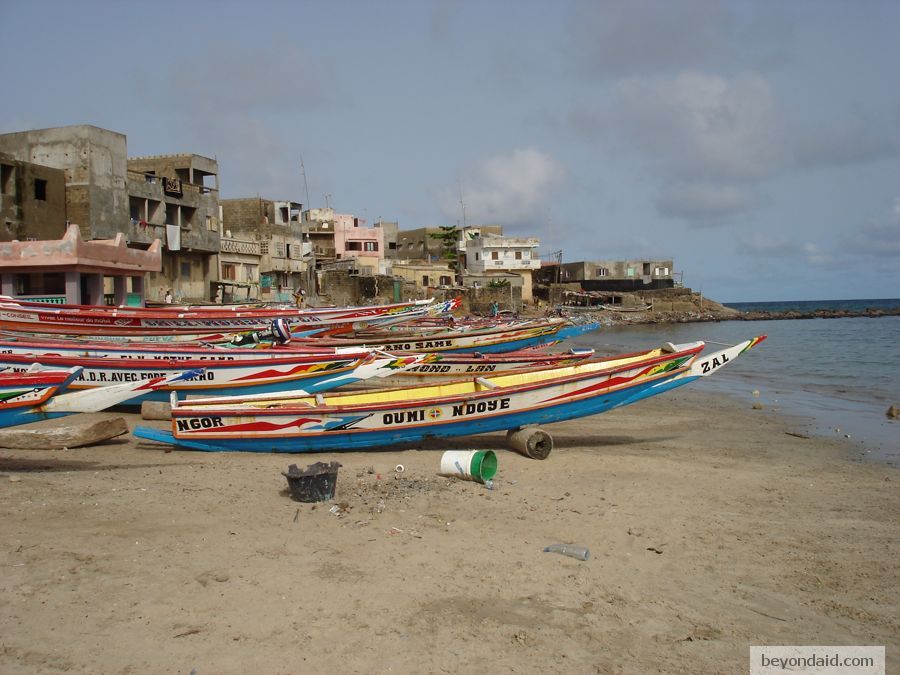
The Guardian quotes a Senegalese fisherman who suggests overfishing by foreign boats off Senegal’s coast will lead to violence if left unchecked.
“The catches are already down 75% on 10 years ago because of the foreign fishing boats. They destroy our gear. If this goes on there will be a catastrophe. Until now we haven’t taken any direct action against the foreign fishermen. Once we took the captain from one of the vessels and we beat him around the balls.
For sure, in 10 years time people will go fishing with guns. They are desperate. When people had enough to eat and drink, Senegal was a calm country. As the situation becomes more difficult it will become more and more like Somalia. We will fight for fish at sea. If we cannot eat, what do you expect us to do?”

New paradigm
The UN News Centre reports that UN Secretary General Ban Ki-moon has said a new economic model is necessary in order for sustainable development to become possible.
“ ‘Gross National Product (GDP) has long been the yardstick by which economies and politicians have been measured. Yet it fails to take into account the social and environmental costs of so-called progress,’ Secretary-General Ban Ki-moon said in his remarks at a high-level meeting at UN Headquarters in New York.

‘We need a new economic paradigm that recognizes the parity between the three pillars of sustainable development. Social, economic and environmental well-being are indivisible. Together they define gross global happiness,’ the Secretary-General told the meeting’s participants.”


Affirmative action ban
The Associated Press reports that a US federal court has upheld California’s ban on university admission policies that take race, ethnicity or gender into consideration.
“At least six states have adopted bans on using affirmative action in state college admissions. Besides California and Michigan, they include Arizona, Nebraska, Oklahoma, and Washington.
Advocates of affirmative action say such bans lead to the exclusion of minority students and less campus diversity.
In California, the year after ban was adopted, the number of black, Latino and Native American students at the University of California’s most prestigious campuses — Berkeley and Los Angeles — plummeted by 50 percent, according to the plaintiffs cited in the court opinion.”

Happy science
Columbia University’s Earth Institute has released the first edition of the World Happiness Report, in which it explains the “new science of happiness.”
“Over time as living standards have risen, happiness has increased in some countries, but not in others (like for example, the United States). On average, the world has become a little happier in the last 30 years (by 0.14 times the standard deviation of happiness around the world).”

EU transparency
The Tanzania Extractive Industries Transparency Initiative’s Bishop Stephen Munga argues that the EITI is useful but limited.
“It provides information at a national level, but does not enable communities to know how much wealth was generated in their locality and should therefore be returned to them. It is also voluntary. Governments decide whether to sign up. Only 35 have done so, leaving dozens of resource-rich countries with no publically available information.
This is why we need robust EU legislation revealing information at project level and published in all countries where EU companies work. Information must be relevant to local communities and attributed to the projects in their area. If not, legislation will simply not achieve its intended aim.”

Food racism
Le Monde reports on the debate in Austria over attempts to change traditional food names that “perpetuate racial prejudice.”
“The rightwing press was quick to jump on the story. Would it be necessary to change ‘Moor in a shirt’ to ‘Othello,’ asked the Kronen Zeitung tabloid, always eager to ridicule political correctness, while a commentator with the daily Die Presse slammed the ‘paternalistic lobby’ and the ‘professional indignants.’

‘Words are a key part of collective identity,’ counters SOS-Mitmensch’s Alexander Pollack. ‘And Austrians proved that by insisting, when they joined the EU, on keeping their own food names, notably for vegetables. If potatoes [erdäpfel in Austria, kartoffel in Germany] are taken so seriously here, the fight for human dignity and respect for others must be too.’” (Translated from the French.)
Latest Developments, March 26

In the latest news and analysis…

NATO secrecy
The New York Times’ C.J. Chivers writes that NATO is withholding information regarding civilian casualties of its Libyan campaign.
“In previous statements, [NATO Secretary General Anders Fogh] Rasmussen had said that there were no ‘confirmed’ civilian casualties caused by NATO in the entire war. That ringing denial overlooked two points: NATO’s definition of a ‘confirmed casualty’ is a casualty that has been investigated by NATO; and because the alliance has refused to look into credible allegations of the scores of civilian deaths that independent investigations have found it caused, it is impossible for the official tally to rise above zero.”

Nominee controversy
The Financial Times reports the US nominee for World Bank president is “under fire” over a 2000 book he co-edited, which was highly critical of “neoliberal” economic policies.
“But colleagues of Dr [Jim Yong] Kim and officials at the US Treasury said that when taken in context he was simply arguing that the distribution of gains from economic growth decides whether it makes life better for the poorest. They pointed out that such criticisms were widespread in the late 1990s and the World Bank had since changed its practices to take account of them.
‘Jim Kim is a brilliant man and fully understands the need for economic growth. What we have said in the book is that economic growth, in and of itself, is insufficient and will not automatically lead to a better life for everyone,’ said Joyce Millen, one of the co-editors of Dying for Growth, and associate professor of anthropology at Willamette University in Salem, Oregon.”

Mining claims
The CBC reports that a coalition of human rights groups has filed for Canada’s highest court to hear a lawsuit against a Canadian mining company for its alleged contributions to a massacre of civilians in the Democratic Republic of Congo.
“The groups allege that Anvil Mining Limited provided logistical support to the Congolese military who raped and murdered people as it crushed a rebel uprising in 2004, killing as many as 100 people in the port city of Kilwa.
That support allegedly included planes, trucks and drivers instrumental in ending the conflict. The port was key to the operation of a copper mine, the exit point for $500,000 worth of copper and silver every day.”

German apology
The Namibian reports on the growing pressure on Germany’s parliament to make amends for crimes committed in its former colony – now called Namibia – during the early 20th Century.
“More than 100 German NGOs have now signed the ‘No Amnesty to Genocide’ appeal to the German parliament joining the demand for a formal apology for the genocide and reparations.
The Left Party’s motion was debated in the Bundestag last Thursday, and the Social Democratic Party (SPD) and Green Party had also introduced similar motions, the latter of which [No Amnesty to Genocide’s Christian] Kopp said made no mention of payments of reparations.
Instead, said Kopp, the SPD and Green Party in their motions simply focus on demanding for the revival of the reconciliation initiative in the context of intensive development aid, and initiative he said was from the start unilaterally implemented with limited success so far.”

Private security boom
The BBC reports on the growing presence of foreign private military firms in and around Somalia.
“Another rapid growth area is the business of armed contractors hired to protect ships in Somalia from on board – a practice officially sanctioned for British ships by Prime Minister David Cameron in October.
Prof Chris Kinsey, a security expert at King’s College London, says Britain’s private security firms were “following the cash cow” much like they did in Iraq in 2003.

He predicts the recent discovery of oil in the region will generate even more work as “huge capital assets” like tankers and drilling ships need protection.”

Internet inequality
The Atlantic reports on new findings that suggest the “lion’s share” of online content still comes from the US and Europe.
“ ‘Many commentators speculated that [the Internet] would allow people outside of industrialised nations to gain access to all networked and codified knowledge, thus mitigating the traditionally concentrated nature of information production and consumption,’ [the Oxford Internet Institute’s Corinne Flick] writes. ‘These early expectations remain largely unrealised.’ ”

Speed kills
The Brookings Institution’s Kevin Watkins writes that Western actors bear some of the blame for the huge number of fatal road accidents in poor countries.
“The global nature of the crisis is epitomised by the road linking Kenya’s capital Nairobi to the port of Mombasa. Upgraded into an eight-lane superhighway with support from the World Bank and other donors, speed is up and journey times are down.
Pity they forgot about the children, hundreds of whom cross the road to get from their homes in the sprawling slum of Kibera to primary school. ‘It makes me scared every single day,’ Mary Kitunga, 12, told me.

Car companies talk about road safety, but people come a distant second to profit when they spot a market opportunity. That’s why major multinational companies operate one set of vehicle standards for the US and another for Brazil.”

Co-development
The Overseas Development Institute’s Jonathan Glennie makes a case for moving beyond aid and its one-way approach to sharing solutions.
“In 2010 Nigel Crisp, a former chief executive of Britain’s National Health Service, published an extraordinary book called Turning the World Upside Down: The Search for Global Health in the 21st Century. Like this [Global Health Strategies Initiatives] report, he argues that the solutions to global health problems are now at least as likely to come from unexpected sources in the developing world as from the west. But he goes a step further, bringing out lessons that rich countries can learn from poorer ones, and treating health similarly in rich and poor countries alike.
Crisp’s talk of ‘co-development’ rather than rich-poor international development resonates in this era of shifting power, and with a blog I wrote a few years ago arguing something similar. When western audiences start to look to poorer countries for solutions in health and in other sectors, they will finally have moved on from the era of aid.”

The Aid Distraction

The focus of Beyond Aid has, from the outset, been the ideas and actions of others. But this week is a special one, at least for high-level international talks, as both the Busan aid effectiveness summit and the Durban climate change conference kick off. So to mark these dual events (and because I am a little under the weather), here is an analysis piece I wrote for the Broker Online in early October. It was written with Busan in mind, but I believe its point regarding global democracy applies equally to Durban.

Talk is cheap. Results are what matter. That is the apparent consensus ahead of next month’s aid effectiveness summit in Busan, whose organizers promise “a clear focus on development results,”  while sceptics worry about a lot of rhetoric and little concrete follow-through.

Unfortunately, the most important and most difficult conversation has barely begun.

There are certainly some positive noises in the lead-up to Busan: recognition that aid is just one aspect of development, talk of mutual accountability and commitment to sustainable development. But if these promises are to become more than talking points, greater efficiency and more reliable data will not be enough. In order to create the kind of massive global change they profess to desire, the leaders of the world’s wealthy countries will have to follow their rhetoric to its logical conclusion.

To say that development is more than aid is an understatement. Donors should begin by acknowledging that aid is a potentially useful but relatively insignificant component of development. As things stand, member states of the OECD’s Development Assistance Committee – the driving force behind Busan – contribute just over 0.3 percent of their combined gross national income to development assistance. Even if they all made good on their decades-old promise to increase that amount to 0.7 percent and on their more recent pledge to give recipient countries ownership of the development process, 99.3 percent of their wealth would still be devoted to economic activities that sometimes clash with the interests of the world’s poor.

The mutual accountability being promised must demand more from donor countries than ODA transparency (though that would be nice too); it has to mean a serious analysis of the impacts their self-interest has on those who do not belong to their electorate. Yale philosopher Thomas Pogge argues citizens of wealthy countries, as well as elites around the world, benefit from “a transnational scheme of social institutions under which some persons are regularly, predictably and avoidably denied secure access to the objects of their human rights.” (Thomas Pogge (2002) World Poverty and Human Rights, Polity Press, Cambridge, p. 227.) In his view, these privileged people have a negative duty not to harm the world’s poor that is greater than the positive duty to provide them with aid. Certainly, such thinking is in line with legal codes around the world that punish crimes but do not reward good deeds. Moreover, Pogge believes the time is right for a rethink of the global system, with the financial crisis providing “a great opportunity to showcase and propagate both causal and moral institutional analysis.”

Transfer pricing by OECD-based transnational corporations costing poor countries billions in lost tax revenues each year; the Canadian government refusing to investigate (or withdraw financial and diplomatic support from) Canadian mining companies accused of serious rights abuses overseas; European and American trade negotiators lobbying hard to prevent loosening of intellectual property rules that impede the fight against non-communicable diseases in poor countries… The list is long and there is a whiff of blaming the victim to the claim that poor countries are responsible for their own development. Certainly, their agency is essential; improved conditions are unlikely without sound local and national policies, which have often been lacking in the past. At the same time, poor countries neither have the jurisdiction nor the political influence to rein in transfer pricing or change the international intellectual property regime. As for the role or indifference of host-country governments regarding extractive industry abuses, factors may include asymmetrical diplomatic relations and incentives built into international rules that grant ownership of natural resources to countries, even though a better case could probably be made for local or global ownership.

The point here is not that poor countries are good and rich ones are bad. But foreign policy accountable only to the voters of the home country has extremely limited democratic legitimacy, and the current global system – one that over the last few centuries has been determined to a great extent by countries that today are OECD members – is in many ways bad for those who are poor. While micro-lending or support for institution building may help, they cannot address bigger systemic problems. And yet, the vast majority of the intellectual and practical effort expended on development over the last 60+ years has focused on changing the way people – from farmers to presidents – in poor countries behave and think.

It is time to look at the second half of the equation without losing sight of the first half. It is time for the established, wealthy countries to accept their share of responsibility for poverty in distant lands and to begin handing over their global control. Not to China, India and Brazil but to the 7 billion people of the world.

Of course, ushering in an era of global democracy would be a lengthy undertaking, far exceeding the scope of a three-day summit, however high-level it might be. But Busan does have the power to significantly change development thinking, and the recognition of negative duties would be a huge step in questioning a global order that leaves billions with virtually no voice.

Sound unrealistic? Maybe. Surely though, it is no more so than suggesting competing entities, whether they be corporations or national governments, will spontaneously prioritize cooperation over their own short-term interests. Or maintaining that by giving away a tiny fraction of their wealth, they can counteract the negative impacts of their core activities and a global system designed to further their goals.

Depressingly, sustainable development would be even tougher to achieve than global democracy, as it would also require counteracting generational selfishness. Is it possible to extend democracy in time as well as space?

Difficult, no doubt. And unless we shift the conversation, impossible.

Latest Developments, November 10

In today’s latest news and analysis…

Beyond aid
The Overseas Development Institute’s Alison Evans reviews UK Development Secretary Andrew Mitchell’s speech on taking a multi-faceted approach to promoting development and she suggests the country “has a lot more to do on its beyond-aid agenda.”
“Mitchell noted the positive ranking of UK funding and policy on climate change in the latest Commitment to Development Index 2011. The same could be said on development-friendly investment and, of course, aid.  What he didn’t mention, however, is that in the very same index, the UK continues to be ranked amongst the bottom four (out of 22 OECD countries) on security (largely reflecting the continued export of military hardware to poor and undemocratic regimes); on technology (mainly regarding spending on research and development and intellectual property rights issues); and, worst of all, on migration (which reflects how easy – or not – it is for people from poor countries to immigrate, access education or find work, send money home, and even return home with new skills and capital). This is the dark side of UK policy on development and it is not heading in the right direction.
As Mitchell celebrates the powerful alchemy of public, private and voluntary sector commitment to development in the UK, he needs also to focus his energy on making UK policy as a whole development-friendly.”

Mining politics
Bloomberg reports the decision by South Africa’s ruling Africa National Congress to suspend Julius Malema is being welcomed by mining executives who had been made nervous by the Youth League leader’s push for nationalizing the country’s mines.
“In April 2010, Citigroup Inc. valued the country’s mineral resources at $2.5 trillion, the most of any nation.
Malema has lobbied the ANC to adopt a policy of nationalization, saying South Africa’s black majority hasn’t benefited adequately from those riches in the 17 years since the end of white-minority rule. Last month, he led thousands of young supporters on a 62-kilometer (39-mile) march between Johannesburg and Pretoria, calling for nationalization and jobs. A quarter of South Africa’s workforce is unemployed.”

Roma deportations
Al Jazeera reports that a European rights watchdog has declared that France’s expulsion of over 1,000 Roma immigrants last year constituted an “aggravated violation of human rights.”
“A Council of Europe committee has now condemned the move as a violation of its social charter – a document that sets out ‘social rights’, such as the right to fair working conditions and to housing. France is a signatory.
France claimed the expulsions were ‘voluntary’ repatriations only.
The committee dismissed the argument, saying ‘the so-called voluntary returns were in fact disguised forced repatriations in the form of collective expulsions’.”

Cleaning bill
Amnesty International and the Centre for Environment, Human Rights and Development  have called on Shell to pay $1 billion as a “first step” toward cleaning up Nigeria’s Niger Delta.
“In 2008, two consecutive spills, caused by faults in a pipeline, resulted in thousands of barrels of oil polluting the land and creek surrounding Bodo, a town of some 69,000 people. Both spills continued for weeks before they were stopped. No proper clean up has ever taken place.
‘The situation in Bodo is symptomatic of the wider situation in the Niger Delta oil industry. The authorities simply do not control the oil companies. Shell and other oil companies have the freedom to act – or fail to act – without fear of sanction. An independent, robust and well-resourced regulator is long overdue, otherwise even more people will continue to suffer at the hands of the oil companies,’ said Patrick Naagbanton, CEHRD’s Coordiantor.
Shell, which recently reported profits of US$ 7.2bn for July-September, initially offered the Bodo community just 50 bags of rice, beans, sugar and tomatoes as relief for the disaster.”

G20 food inaction
The Inter Press Service reports that the U.N.’s special rapporteur on the right to food, Olivier De Schutter, believes the lack of substantive progress on global food policies at last week’s G20 summit was the result of lobbying from commercial interests, especially in biofuel-producing countries.
“Back in 2008, a note released by the World Bank’s development prospects group spotlighted how biofuels were responsible for a full 75 percent of the then skyrocketing food prices.
But in spite of strong evidence that biofuels and agrofuels are ‘one of the major drivers of speculation on the commodities markets and one of the major reasons why we have such high pressure on land in developing countries, particularly in sub-Saharan Africa,’ according to De Schutter, the G20 completely bypassed the issue.”

Legal empowerment
Namati’s Vivek Maru calls on the international community to establish a global fund for “legal empowerment” in order to ensure laws and policies apply as much in practice as in theory.
“Legal empowerment is a public good: it renders governments more accountable, and makes development more equitable. But unlike public health, for example, states have a natural disincentive to support legal empowerment, because it constrains state power – which is all the more reason for a multilateral financing mechanism.
Social movements in India, the Middle East, the United States, and elsewhere are demanding institutions that promote greater citizen participation and oversight. The challenge of responding to those movements does not belong exclusively to a handful of governments. It belongs to all of us.”

Sector equality
The European Network on Debt and Development’s Alex Marriage argues the European Commission’s recently proposed corporate transparency rules need to target more than just mining, oil and gas, and logging companies.
“Evidence presented in [an upcoming] report finds that extractive commodities are only a small part of the problem and accounted for just 5% of the trade mispricing activity taking place between the EU and third countries in 2007. This clearly suggests country-by-country reporting is needed in all sectors.”

Introducing Beyond Aid

Sustainable development. Is there such a thing in a global economic system where perpetual growth is the only way to avoid crisis? Can this planet sustain 7 billion people living like the average Dane or Canadian? Or how about the 10 billion projected by the end of the century?

Encouraging more people to live destructively seems like a questionable evolutionary tactic. But the prevailing levels of inequality suggest a profoundly unjust, and possibly dangerous, world order. If current poverty is unacceptable and current wealth is unsustainable, especially if extended to billions more, perhaps we should seek a compromise entailing upward movement from the bottom and downward movement from the top.

Without such a compromise, it is difficult to imagine the level of global cooperation required of an era in which, according to Columbia University economist Jeffrey Sachs, “our security, even our survival, will depend on the world forging a triple commitment: to end extreme poverty; to ensure human rights for all; and to protect the natural environment from human-induced crises of climate change, destruction of biodiversity, and depletion of fresh-water reserves and other vital resources.”

For all the attention it garners, aid is only a small piece of the puzzle. Even if all wealthy countries met their pledged target of 0.7 percent of GNP, 99.3 percent of their economies would still be geared toward “wining the future.”

If we want fundamentally different results, it may be time to make fundamental changes to a global system in which poor countries have little say and their people almost none. In other words, wealthy countries and their citizens may have to change as much as their less prosperous counterparts do. At the very least, we surely need to start asking more questions…

This post marks the start of Beyond Aid, a journalistic blog that will ask questions about global inequality. By “journalistic,” I mean I will be asking questions rather than offering my own solutions. I feel my credentials are insufficient to present my own thoughts as answers, but sufficient to ask questions that too rarely enter the discussion about poverty and development. I will leave it up to the experts to provide answers.

Initially, the content of Beyond Aid will consist mainly of Latest Developments, a daily summary of news and analysis relating, in my view, either to the perpetuation or reduction of global inequality. I hope these summaries will encourage readers to view the problem in a more holistic manner by examining the positions of wealthy nations in areas such as trade and immigration – whether expressed through their own foreign policy or the policies of the international institutions over which they hold so much sway – as well as the actions of transnational corporations and NGOs whose role in poor countries sometimes exceeds that of the state.

Once Beyond Aid has been up and running for a few weeks, I will supplement these daily posts with regular “Ideas” features consisting of book reviews, Q&As with individual experts, or surveys of a number of experts and thinkers on one particular idea. These posts will aim to take “beyond aid” thinking to the next level by delving into questions of global democracy, science and media discourse.

But my most ambitious objective is to provide original reporting on “beyond aid” issues, using Canada’s foreign footprint as a case study. Although I have an international audience in mind, as will be reflected in the Latest Developments and Ideas posts, I feel a case study will provide the grounding necessary to avoid excessive abstraction. As this reporting will require overseas fieldwork, it will be largely dependent on my ability to secure research grants. I will keep readers posted on what they can expect and when. In the meantime, I will produce occasional travel-free investigative pieces resulting from freedom of information requests, financial record analyses and the like.

I have chosen Canada for a number of relatively straightforward reasons. First, I live in Vancouver and due to linguistic, geographic and economic factors, the majority of my research must logically focus on Canada and the US. Second, I have spent much of the last two years researching Canadian policies, companies and development discourse. And third, I believe the sorts of tough questions I have are best asked of one’s own country.

My intention, however, is not to single out Canada as a great enemy of the world’s poor. While every country has its policy strengths and weaknesses, Canada’s Commitment to Development Index score places it ninth out of 22 wealthy donor countries. I hope this averageness will help to provide a relatable, middle-of-the-road case study from which both Canadians and non-Canadians can draw lessons. Perhaps it will even inspire others to examine their own country’s foreign footprint.

Finally, I should anticipate a couple of inevitable criticisms. By focusing attention on the role of wealthy countries in perpetuating global poverty, I open myself up to attack from at least two very different corners. The first will say that my Western-centric approach disempowers the world’s poor by denying them agency in their own lives. The second will say I am a self-hating Westerner glossing over the endemic reasons for ongoing extreme poverty. To both I would say that I believe the governments and inhabitants of poor countries bear a large share of responsibility for their current predicament and their future solutions. Nothing can improve without their will and determination. At the same time, the countries that set the rules of the game have to accept at least some of the blame for negative outcomes

Extending the argument to journalism, if Western journalists are objective in their treatment of poor countries, theirs is an asymmetrical objectivity that dispassionately presents root problems as residing in Nigeria and Bangladesh, and the solutions as coming from France and Australia. While I too strive for journalistic objectivity, my focus on rich-country policies no doubt represents another form of asymmetry, but one I hope can provide a reasoned counterweight to the often one-sided discourse on poverty and inequality.

The extent of the inequality in the world today is not an unavoidable fact of life. But I believe there is a gap in the public discourse of the countries that represent one half of the equation. I hope Beyond Aid can contribute in some way, however small, to filling that gap.