
Latest Developments, March 6

In the latest news and analysis…

Costly loophole
ActionAid has released a report on the potential impacts of UK government plans to open a “huge new tax loophole” by watering down regulations discouraging the use of tax havens.
“This loophole will make it much easier for UK-based global businesses to avoid taxes in the developing countries they operate in, at an estimated cost of £4 billion a year. Some of the poorest countries in the world, with minimal public services, will be losing vital revenues they could be investing in healthcare and education, keeping them more dependent on foreign aid.”

DR Congo’s missing revenues
Voice of America reports that anti-corruption investigators cannot locate $70 million that mining companies say they have paid to the Congolese government, but these corporations may be short-changing the government by a “far greater” amount.
“Mining companies may be hiding some of their income and thus paying less tax than they should. [The Extractive Industries Transparency Initiative’s Jeremy] Dumba said he knew of cases where this may have been happening.
He said for example there’s the case of a company that exported 400,000 tons of minerals.  They should have paid 2 percent tax on that, but their tax declaration came to much less, indicating that they hadn’t declared all their income.”

Global poverty numbers
The Brookings Institution’s Laurence Chandy and Homi Kharas argue that the World Bank’s latest poverty figures contain too many discrepancies to be taken “at face value.”
“The World Bank’s global poverty estimates extend over nearly three decades, with its earliest estimates provided for the year 1981. Throughout this period, the global headcount (based on the $1.25 poverty line) has been dominated by three population groups: Sub-Saharan Africa, India and China. These three account for a remarkably constant three-quarters of the world’s poor—a share which has never deviated by more than three percentage points on either side. Yet poverty estimates for each of the three suffer from glaring problems: insufficient survey data, flawed surveys, and faulty PPP conversions, respectively. If we cannot believe the poverty estimates for Sub-Saharan Africa, India and China, then we cannot believe the World Bank’s global estimates, and we must admit that our knowledge of the state of global poverty is glaringly limited.”

The UK’s 44%
British MP Diane Abbott calls for an examination of the “underlying reasons” for the UK’s 44 percent unemployment among young black people, a rate more than double that of their white peers.
“Some people will be antagonised by any discussion of the fact that spiralling unemployment is hitting black people hardest. They may think it a price worth paying for cutting back on public spending. Or they may argue that it doesn’t matter what colour you are. But the more unequal a society, the more unstable it is. And inequality with a racial dimension risks creating a time bomb. The immediate response to last summer’s riots was (quite correctly) a call to restore order. But these figures are not irrelevant. Policymakers cannot afford to ignore black unemployment.”

Françafrique lives
Former French ambassador to Senegal, Jean-Christophe Rufin, writes that the end of France’s neocolonial activities in Africa, promised by Nicolas Sarkozy during his presidential candidacy in 2006, has not materialized.
“French interventionism in Africa has rarely been stronger than during the last five years. Featuring a military rescue for Chad’s Idriss Déby, support for Mauritania’s coup leader Mohamed Ould Abdel Aziz, an electoral helping hand for Gabon’s Ali Bongo, armed intervention in Côte d’Ivoire, support for the transition in Guinea, armed operations against Al-Qaeda in Niger, to say nothing of the intervention in Libya, the past five years have been marked by all-out French activism, covert or overt, on the African continent.” (Translated from the French.)

Pacification program
International NGO veteran Rick Arnold argues the new partnership linking the Canadian International Development Agency, World Vision and Barrick Gold in Peru has more to do with pacification than development.
“As [Andean Coordinator of Indigenous Organizations’ Miguel] Palacin is strongly suggesting, World Vision-Canada should focus its efforts on Canada. It should join with other organizations working to bring about needed legislation at home to hold Canadian mining companies responsible for damages done abroad.”

Moral calculus
In a Q&A with the Atlantic, Oxford University’s Nick Bostrom reaches a controversial conclusion in weighing the value of current and future generations.
“Well suppose you have a moral view that counts future people as being worth as much as present people. You might say that fundamentally it doesn’t matter whether someone exists at the current time or at some future time, just as many people think that from a fundamental moral point of view, it doesn’t matter where somebody is spatially—somebody isn’t automatically worth less because you move them to the moon or to Africa or something. A human life is a human life. If you have that moral point of view that future generations matter in proportion to their population numbers, then you get this very stark implication that existential risk mitigation has a much higher utility than pretty much anything else that you could do. There are so many people that could come into existence in the future if humanity survives this critical period of time—we might live for billions of years, our descendants might colonize billions of solar systems, and there could be billions and billions times more people than exist currently. Therefore, even a very small reduction in the probability of realizing this enormous good will tend to outweigh even immense benefits like eliminating poverty or curing malaria, which would be tremendous under ordinary standards.”

Raging against cupcakes
Exasperated by the theme of several International Women’s Day events, the Overseas Development Institute’s Claire Melamed asks when cupcakes became the “international symbol of womankind.”
“Why does this fetishisation of cupcakes make me so annoyed?  Cupcakes are just so twee-ly, coyly, ‘ooh no I really shouldn’t’-ly, pink and fluffily, everything that I think feminism is not.  It’s feminism-lite, feminism as consumption and ‘me time’ (grr), rather than feminism as power and politics and equal pay.”

World Bank track record
Columbia University’s Jeffrey Sachs gives a stinging historical account of the World Bank, as he continues to make his case for becoming its 12th consecutive American, male president.
“From the Bank’s establishment until today, the unwritten rule has been that the US government simply designates each new president: all 11 have been Americans, and not a single one has been an expert in economic development, the Bank’s core responsibility, or had a career in fighting poverty or promoting environmental sustainability. Instead, the US has selected Wall Street bankers and politicians, presumably to ensure that the Bank’s policies are suitably friendly to US commercial and political interests.

For too long, the Bank’s leadership has imposed US concepts that are often utterly inappropriate for the poorest countries and their poorest people.”
Latest Developments, March 5

In the latest news and analysis…

Justifying targeted killings
Talking Points Memo provides an excerpt of US Attorney General Eric Holder’s speech in which he explains the thinking behind the current administration’s growing habit of eliminating perceived threats extrajudicially.
“Some have called such operations ‘assassinations.’ They are not, and the use of that loaded term is misplaced. Assassinations are unlawful killings. Here, for the reasons I have given, the U.S. government’s use of lethal force in self defense against a leader of al Qaeda or an associated force who presents an imminent threat of violent attack would not be unlawful — and therefore would not violate the Executive Order banning assassination or criminal statutes.

Some have argued that the President is required to get permission from a federal court before taking action against a United States citizen who is a senior operational leader of al Qaeda or associated forces. This is simply not accurate. “Due process” and “judicial process” are not one and the same, particularly when it comes to national security. The Constitution guarantees due process, not judicial process.”

Drones in the Philippines
American University’s Akbar Ahmed and Frankie Martin argue last month’s US drone strike in the southern Philippines – the first in Southeast Asia – has the potential to “further enflame” a conflict that has killed an estimated 120,000 over the past four decades.
“By unleashing the drones, the US has pushed the conflict between centre and periphery in the Philippines in a dangerous direction. If there is one lesson we can learn from half a millennium of history it is this: weapons destroy flesh and blood, but cannot break the spirit of a people motivated by ideas of honour and justice.
Instead, the US and Manila should work with the Muslims of the Philippines to ensure full rights of identity, development, dignity, human rights and self-determination. Only then will the security situation improve and the Moro permitted to live the prosperous and secure lives they have been denied for so long; and only then will the Philippines be able to become the Asian Tiger it aspires to be.”

Kiobel expanded
Bloomberg reports the US Supreme Court has expanded the scope of a human rights and corporate liability case involving Nigerian plaintiffs and oil giant Shell.
“When the justices heard arguments in the Shell case last week, they focused on whether the Alien Tort Statute allowed suits against corporations. Several justices, including Samuel Alito, suggested during the argument that they were more interested in considering contentions that the law can’t be applied overseas.
A ruling on the so-called extraterritoriality issue would potentially impose more sweeping limits on lawsuits, shielding corporate officers as well as the companies themselves.”

Beyond Kiobel
The Castan Centre for Human Rights Law’s Joanna Kyriakakis presents an overview of the issues at play in the Kiobel case, as well as future avenues for corporate liability advocates should the Supreme Court rule in Shell’s favour.
“Comments by plaintiff lawyer, Paul Hoffman, in a panel conversation the day after the hearing indicate that, whatever the outcome in this case, they will continue to pursue corporations implicated in human rights abuses through US judicial avenues. One option already noted would be to litigate individual corporate executives. In many respects, this option may be less appealing to the business world.”

Rich get richer
UC Berkeley’s Emmanuel Saez presents new figures suggesting these are good times for America’s “one percent”.
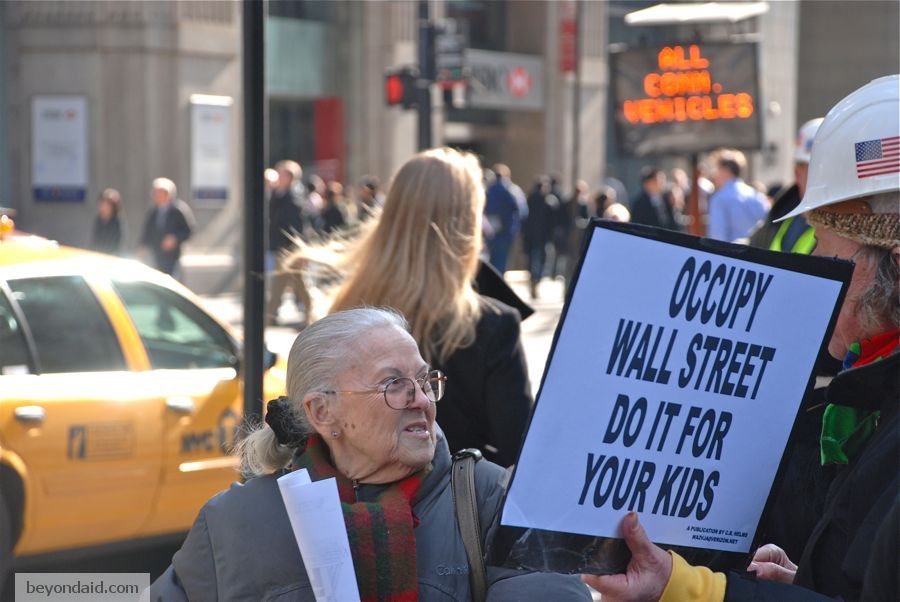
“In 2010, average real income per family grew by 2.3% but the gains were very uneven. Top 1% incomes grew by 11.6% while bottom 99% incomes grew only by 0.2%. Hence, the top 1% captured 93% of the income gains in the first year of recovery. Such an uneven recovery can help explain the recent public demonstrations against inequality. It is likely that this uneven recovery has continued in 2011 as the stock market has continued to recover. National Accounts statistics show that corporate profits and dividends distributed have grown strongly in 2011 while wage and salary accruals have only grown only modestly. Unemployment and non-employment have remained high in 2011.”

In defense of social unrest
In a Q&A with Inter Press Service, former UN Conference on Trade and Development head Rubens Ricupero speaks approvingly of how “dissatisfaction” drives history.
“I hope this movement demanding change will modify not only the internal economies of countries, in the sense of moving away from that market fundamentalism, but that it will also change the institutions that have represented that fundamentalist spirit.
And in order for that to happen, the central role has to be played by people around the world – not only in the (developing) South – who are aware of the problem, that it is not possible to continue with an organisation that foments the growth of inequality.”

World Bank non-leadership
Following close on the heels of Columbia University economist Jeffrey Sachs’s open application to become the next World Bank president, New York University’s William Easterly spells out how he would not run the international financial institution.
“I would not lead the World Bank by perpetuating the technocratic illusion that development is something ‘we’ do to ‘them.’ I would not ignore the rights of ‘them.’ If the New York Times should happen to report on the front page that a World Bank-financed project torched the homes and crops of Ugandan farmers, I would not stonewall the investigation for the next 165 days, 4 hours, 37 minutes, and 20 seconds up to now.”

Development gospel
Aid on the Edge of Chaos’s Ben Ramalingam argues the World Bank must stop being a “Development Church” that promotes economic dogma if its client countries are ever going to be “intellectually in the driver’s seat.”
“[Former World Bank staffer David] Ellerman argues that in the face of these Official Views, adverse opinions and critical reasoning tend to give way to authority, rules and bureaucratic reasoning shaped by the hierarchies within the organisation. Moreover, these Official Views “short-circuit” and bypass the active learning capability of national and local actors, and substitute the authority of external agencies in its place.”

Latest Developments, March 4

In the latest news and analysis…

Sachs for president
Columbia University’s Jeffrey Sachs makes the case for why he should become the 12th consecutive American man to serve as president of the World Bank.
“In Latin America, Eastern Europe, Africa and Asia, I’ve been a trusted problem-solver for heads of state and impoverished villagers. My good fortune to see the world through the eyes of others, during 30 years working on some of the world’s most vexing problems, has helped me understand various regions’ challenges and the need for tailored solutions. There are reasons why what works well in the United States might not work in Nigeria, Ethiopia or India.”

Assessing Sachs
The Guardian explores Jeffrey Sachs’s CV in light of his declared desire to become World Bank president.
“But Sachs’s role in development hasn’t always been uncontentious. As a consultant in the late 1980s and early 1990s while an academic at Harvard, he advised Poland, then Russia, on their economic reforms. The strategy adopted by the Kremlin, under the tutelage of the IMF and the US treasury, involved a headlong dash towards privatisation and liberalisation that became known as ‘shock therapy’.
The consequences were disastrous, enriching a tiny coterie of oligarchs who bought up public assets on the cheap, and driving Russia towards defaulting on its debts.
However, Sachs now disowns the extreme policies for which many have since blamed him.”

Escalation concerns
In an interview with Al-Jazeera, the UN high commissioner for human rights, Navi Pillay, expresses her opposition to arming Syria’s rebels.
“ ‘Any kind of provision of military equipment to the opposition, in my view, will escalate the violence and not lead to the goal we are trying to achieve,’ Pillay explains.
‘I think that countries should be focusing their energy on achieving a peaceful resolution here, and to ensure that the root causes are addressed … and supplying arms to a few individuals is not going to help that situation … As I see it, it’s not the role of outsiders to arm one group or the other.’ ”

Polio protest
McClatchy Newspapers reports a group of American humanitarian NGOs is alleging the CIA’s use of a fake immunization scheme to locate Osama Bin Laden has set back the fight against polio in Pakistan, which had the highest number of cases in the world last year.
“ ‘The CIA’s use of the cover of humanitarian activity for this purpose casts doubt on the intentions and integrity of all humanitarian actors in Pakistan, thereby undermining the international humanitarian community’s efforts to eradicate polio, provide critical health services and extend life-saving assistance during times of crisis, like the floods seen in Pakistan over the last two years,’ the coalition of aid agencies, InterAction, wrote in its letter to CIA director David Petraeus.”

Affordable medicines on trial
Intellectual Property Watch reports on a case set to be heard by India’s Supreme Court later this month, which could have massive repercussions on global health.
“For access to medicine campaigners, Novartis’s legal action could threaten the availability of affordable medicines for the world’s poorest patients. For the pharmaceutical company, the protection of massive R&D investment and innovation is on the line.

‘What is at stake goes far beyond the only granting of a patent for this anticancer drug. This legal challenge aims in fact at weakening a legitimate and invaluable public health clause of the Indian law, Section 3(d), which intends to limit the multiplication of patents on trivial changes to existing medicines, a common practice by multinational pharmaceutical companies known as “evergreening”, ’ said Patrick Durisch, the health programme coordinator of the Berne Declaration.”

Poverty falling
The Economist reports on new World Bank figures suggesting poverty is “declining everywhere,” though primarily in China.
“If you exclude China, the numbers are less impressive. Of the roughly 1.3 billion people living on less than $1.25 a day in 2008, 1.1 billion of them were outside China. That number barely budged between 1981 and 2008, an outcome that Martin Ravallion, the director of the bank’s Development Research Group, calls ‘sobering’.”

The war over women’s health
The New York Times’ Nicholas Kristof lays out the process, which he describes as “bordering on state-sanctioned rape,” that women in Texas must now go through before having an abortion.
“Under a new law that took effect three weeks ago with the strong backing of Gov. Rick Perry, she first must typically endure an ultrasound probe inserted into her vagina. Then she listens to the audio thumping of the fetal heartbeat and watches the fetus on an ultrasound screen.
She must listen to a doctor explain the body parts and internal organs of the fetus as they’re shown on the monitor. She signs a document saying that she understands all this, and it is placed in her medical files. Finally, she goes home and must wait 24 hours before returning to get the abortion.”

Selling globalization
Monthly Review’s Michael Yates looks at how inequality and globalization fuel each other.
“Incomes do not just flow from poorer to richer households but from lesser to greater businesses (this latter phenomenon is part of what [Eric] Schutz calls “the business power structure”). Large firms, a small number of which dominate many markets, are best situated to expand globally, and as they do, they become more powerful economically and politically. This power permits them to increase the rate of exploitation of labor, again especially in the Global South, as they can both utilize modern labor process control techniques better than their smaller rivals and exert political pressure more effectively. Their growing and almost total control of mass media creates a modern propaganda system that shapes the culture in a thoroughly pro-capitalist manner, forging a climate in which it is difficult for people to escape being bombarded with the idea that there is no alternative to the terrible things that have been happening to them. Governments are increasingly seen as incapable of doing anything except getting out of the way of the capitalist juggernaut.”

Latest Developments, March 1

In the latest news and analysis…

Pakistan misconceptions
The Telegraph’s Peter Osborne argues simultaneously that media reports exaggerate current levels of violence in Pakistan and that the West should acknowledge its own role in creating instability in Afghanistan’s neighbour.
“In recent years, the Nato occupation of Afghanistan has dragged Pakistan towards civil war. Consider this: suicide bombings were unknown in Pakistan before Osama bin Laden’s attack on the Twin Towers in September 2001. Immediately afterwards, President Bush rang President Musharraf and threatened to ‘bomb Pakistan into the stone age’ if Musharraf refused to co-operate in the so-called War on Terror.
The Pakistani leader complied, but at a terrible cost. Effectively the United States president was asking him to condemn his country to civil war by authorising attacks on Pashtun tribes who were sympathetic to the Afghan Taliban. The consequences did not take long, with the first suicide strike just six weeks later, on October 28.”

Dependency theory
The Overseas Development Institute’s Jonathan Glennie and Nora Hassanaien make the case for the continued usefulness of the currently out-of-fashion dependency theory.
“It is critical that voters in the rich world learn that their wealth is related to a historic exploitation of other parts of the world, especially when they are eventually asked to readjust their living habits and conditions in order to better accommodate the just requirements of poorer countries.

‘Everyone is doing better,’ say the people who are doing better. But what about those who aren’t? Is their lack of progress the foundation on which the progress of others rests? To answer that question, and others, dependency theories may be needed now more than ever.”

Debt repudiation
James Boyce and Léonce Ndikumana, the authors of Africa’s Odious Debts: How Foreign Loans and Capital Flight Bled a Continent, suggest a number of ways to curb the “hemorrhage of Africa’s scarce resources” to other parts of the world.
“Last but not least, African countries can and should selectively repudiate odious debts incurred by past regimes where the borrowed funds were not used for the benefit of the public, and creditors knew or should have known this to be the case.
Bankers threaten that repudiation of such debts would bring new hardships as the debtor country is cut off from access to new borrowing. But with selective repudiation, legitimate creditors would have no reason to fear, as their debts would continue to be honored. Moreover, repudiation will benefit the many countries that currently pay more in debt service than they receive in new loans.
These steps would not only benefit the people of Africa today, but also strengthen future incentives for the exercise of due diligence by creditors and for responsible borrowing by governments. Banking on capital flight is a symptom of deeper defects in our international financial architecture. What’s needed, in Africa and abroad, are reforms tough enough to ensure that banks serve the people rather than fleecing them.”

GM & apartheid
The Mail & Guardian reports bankrupt auto giant General Motors has reached a settlement with South African plaintiffs over claims it supplied vehicle parts to apartheid-era police.
“There are still cases pending in the Second Circuit Court of Appeal in New York against Ford Motor Company, IBM, Daimler AG and Rheinmetall, [the plaintiffs’ lawyer Charles]Abrahams said.

The original damages suffered and claimed for were human rights violations including assassination and murder, indiscriminate shooting, prolonged detention without trial, torture and rape (in detention). An additional damage of ‘denationalisation’ (deprivation of citizenship) was later included.”

Escaping responsibility
Yale Law School’s Oona Hathaway explains why she believes the US Supreme Court should rule that corporations can be sued in the US for human rights abuses committed overseas.
“Absent liability under the [Alien Tort] statute, corporations would often escape responsibility, even though they have made additional profit as a result of terrible abuses they directly committed or aided and abetted. There is usually no recourse available in the country where the abuses took place, often because the government participated. And lawsuits against corporate agents are usually impossible (because the agents are not within the jurisdiction of the courts) or fruitless (because the agents could never pay a judgment against them). Concluding that corporations cannot be held liable under the statute would thus mean that the victims of a modern-day I.G. Farben, the company that produced the gas for the Nazi gas chambers, would have no effective legal recourse against it.”

Future of warfare
TomDispatch.com’s Tom Engelhardt writes that all signs point toward a future where America’s “citizen’s army” has been replaced by a robot military.
“In other words, we are moving towards an ever greater outsourcing of war to things that cannot protest, cannot vote with their feet (or wings), and for whom there is no ‘home front’ or even a home at all. In a sense, we are, as we have been since 1973, heading for a form of war without anyone, citizen or otherwise, in the picture – except those on the ground, enemy and civilian alike, who will die as usual.
Of course, it may never happen this way, in part because drones are anything but perfect or wonder weapons, and in part because corporate war fought by a thoroughly professional military turns out to be staggeringly expensive to the demobilised citizen, profligate in its waste, and – by the evidence of recent history – remarkably unsuccessful. It also couldn’t be more remote from the idea of a democracy or a republic.”

Benefit corporations
PBS NewsHour reports on new laws in seven US states that redefine the role and goal of corporations.
“ ‘Existing corporate law was built for maximization of shareholder value. And so the legal innovation here is that idea that the directors and the officers of the company are now protected to be able to consider a broader set of interests,’ [said B Lab’s Andrew Kassoy].
The law protects firms that file as benefit corporations from shareholder lawsuits that could otherwise charge they didn’t maximize profits.
B Corps are legally mandated to maximize social benefits as well.”

Latest Developments, February 29

In the latest news and analysis…

Pharma corruption
Reuters reports on global efforts to rein in corruption in the pharmaceutical industry, as multinational drug companies seek to expand their business beyond traditional markets.
“The drugs business is particularly exposed to corruption, Transparency International says: pharmaceuticals create vast opportunities for graft across both rich and poor countries. Its 2011 Bribe Payers’ Index ranks pharmaceuticals and healthcare 13th out of 19 industries on probity – a lower ranking than defense firms, though above mining and construction.

Over the past year eight of the world’s top 10 drugmakers – Pfizer Inc, Novartis AG, Merck & Co Inc, Sanofi, AstraZeneca, GlaxoSmithKline Plc, Johnson & Johnson and Eli Lilly & Co – have all warned that they may face liabilities related to charges of corruption in numerous overseas markets.
Investigations into potential wrongdoing by pharmaceutical firms cover activities in countries including Argentina, Brazil, Canada, China, Germany, Italy, Poland, Russia and Saudi Arabia, according to company filings. They also involve possible improper conduct of clinical trials, which are increasingly being run in lower-cost Asian or East European countries.”

Sustainable development?
The Gaia Foundation has released a new report that highlights the rate at which global extractive industries have grown over the last 10 years.
“For example, iron ore production is up by 180%; cobalt by 165%; lithium by 125%, and coal by 44%. The increase in prospecting has also grown exponentially, which means this massive acceleration in extraction will continue if concessions are granted as freely as they are now.

The rights of farming and indigenous communities are increasingly ignored in the race to grab land and water. Each wave of new extractive technologies requires ever more water to wrench the material from its source. The hunger for these materials is a growing threat to the necessities for life: water, fertile soil and food. The implications are obvious.”

Time limit
The Guardian reports the UK government plans to implement new rules that would require migrant workers earning less than £35,000 a year to leave after 5 years.
“Ministers hope changing settlement rights for skilled workers will put plans back on track to cut net migration from its current 250,000 a year to ‘tens of thousands’ by the next general election. They believe the £35,000-a-year earnings threshold will ensure only the ‘brightest and the best’ migrants settle in the UK. But critics say it will simply mean only the wealthy and the comfortable are able to come and live and work in Britain permanently.”

Power, Inc.
Foreign Policy’s David Rothkopf examines what it means to live in a world where large numbers of corporations have grown more powerful than most countries.
“Today’s corporations often conduct something very much like their own foreign policy. They launch active political advocacy campaigns, such as ExxonMobil’s lobbying to kill U.S. acceptance of the Kyoto Protocol. They undertake significant security initiatives, as in the company formerly known as Blackwater’s defense contracting during the Iraq war. They also provide health care, training, shelter, and other functions that states ought to but can’t or won’t provide.
The result is societies that are profoundly out of whack, with far too much power in the hands of massive, often distant corporate entities that are only accountable, fundamentally, to their shareholders. Meanwhile, the public is seeing that the increasingly weak institutions designed to give them a voice are unable to meet some of the most basic terms of the social contract, as the issues that need to be addressed are effectively beyond their jurisdiction.”

Remedy gaps
Haley St. Dennis of the Institute for Human Rights and Business argues the current US Supreme Court case pitting Nigerian plaintiffs against oil giant Shell is a “stark reminder” that voluntary corporate policies are not always enough to prevent environmental and human rights abuses.
“But clearly governments must be at the forefront in ensuring effective remedies. Under the state duty to protect, governments have an obligation to ensure access to justice through provision of effective judicial and non-judicial remedies accessible to all.

It is safe to say that whether or not the Supreme Court finds in favour of the Kiobel plaintiffs, the need for more accessible forums for national or international redress to answer grievances unable to be remediated locally will remain a priority on the public agenda. Given the high threshold of evidence involving international crimes, tort laws such as [the Alien Tort Claims Act] and similar international processes, though often arduous, offer more accessible options.”

The cost of complicity
In a Q&A with Embassy Magazine, the University of Massachusetts Amherst’s Léonce Ndikumana discusses African capital flight which, he says, “kills babies.”
“We then look at the linkages between external flight and external borrowing. Statistically we find that for every dollar that comes into Africa, between 40 and 60 cents comes out of the continent in the form of capital flight. Africa keeps 40 cents, but Africa is going to have to pay the whole dollar, because it’s the debt that they signed.

We emphasis the fact that capital flight is the result of mismanagement, corrupt management in Africa, but also complicity of foreign actors including banks that take this money being robbed from the continent and turn a blind eye and don’t ask any questions about a government official bringing a million to deposit.”

Creating new truths
J.D.M. Stewart, who teaches history at Toronto’s Bishop Strachan School, takes up the call issued by the Truth and Reconciliation Commission of Canada for the country’s students to be taught about the history of residential schools and their devastating impact on Aboriginal culture.
“As Mr. Justice Murray Sinclair, the TRC’s chair, wrote: ‘There is an opportunity now for Canadians to engage in this work, to make their own contributions to reconciliation, and to create new truths about our country.’ ”