
Latest Developments, May 18

In the latest news and analysis…

G8(ish) summit
Deutshce Welle reports on the issues and questions facing the G8 as it convenes this weekend in Camp David, where the presidents of Ethiopia, Tanzania, Ghana and Benin will be in attendance, but Russia’s will not.
“The list of topics is long for a summit that doesn’t even last 24 hours. It spans from food security for Africa to the nuclear debate with Iran, troop withdrawal from Afghanistan, further course of action in Syria and North Korea all the way to climate protection.

So time and again the question arises what the point of the G8 summits even is. After all: the eight countries represent 15 percent of the world’s population and two-thirds of the international economic performance. It is a loose union of states, without any solid organization, financing or rules. It was created as a forum in the middle of the oil crisis in the 1970s to coordinate economic and trade issues. But political and economic questions are now regularly on the agenda – even when the G20 is considered the more powerful economic forum and the UN Security Council regulates sanction mechanisms.”

US army to Africa
Al Jazeera reports that a combat brigade will be assigned next year to the US military’s Africa Command “to do training and participate in military exercises” around the continent.
“General Ray Odierno, the army’s chief of staff, says the plan is part of a new effort to provide US commanders around the globe with troops on a rotational basis to meet the military needs of their regions.
This pilot programme sends troops to an area that has become a greater priority for the Obama administration since it includes several nations from where it perceives an increasing threat to the US and the region.”

Let them eat tobacco
Inter Press Service reports that Malawi’s IMF-prescribed currency devaluation earlier this month has made life more difficult for the country’s poor by causing a huge hike in food prices but should help the tobacco industry.
“Tobacco is the country’s main revenue earner, accounting for up to 60 percent – or 950 million dollars – of foreign exchange. According to the Ministry of Agriculture and Food Security, Malawi’s tobacco accounts for five percent of the world’s total exports.

‘On the export front, the devaluation will lead to increased demand for Malawi’s exports in the short run. In the long run, this is expected to stimulate production and thus lead to increased production of exportable goods … thereby generating foreign currency,’ said [the Malawi Economic Justice Network’s Dalitso] Kubalasa.
He added that because the prices of imports had automatically risen and become unaffordable for some, the situation would motivate locals to substitute these goods with commodities that can be produced locally. It would provide an incentive to local industry, he said.
But he admitted that the devaluation would affect the country’s middle class and poor.”

Matter of conscience
The Harvard School of Public Health’s Winston Hide explains that his conscience compelled his resignation from the editorial board of the Elsevier-published Genomics journal.
“No longer can I work for a system that provides solid profits for the publisher while effectively denying colleagues in developing countries access to research findings.”

The vast majority of biomedical scientists in Africa attempt to perform globally competitive research without up-to-date access to the wealth of biomedical literature taken for granted at western institutions. In Africa, your university may have subscriptions to only a handful of scientific journals.

So I’d prefer to devote the limited time I have available to an open access journal that provides its work at no cost to researchers who urgently require its contents to improve their environment.”

Growing debt
The Guardian reports that a few short years after a series of debt cancellations, total external debt owed by “developing countries” increased by $437 billion in 2010 to reach $4 trillion.
“A major chunk of the debt owed by 32 countries, mostly in sub-Saharan Africa, was eliminated by the heavily indebted poor countries (HIPC) initiative of the World Bank and IMF, which was reinforced by the G8’s 2005 multilateral debt relief initiative (MDRI).
But many poor countries in Asia and Latin America (for example, Jamaica and El Salvador) did not have debts written off because their income per capita was too high to meet the IMF and World Bank criteria. Others, such as Bangladesh, did not qualify for cancellation because their debts were seen as sustainable.

But even in countries that did qualify for debt write-offs, there is evidence that external debts, which fell significantly after 1995, are on the rise again.
‘These loans are building up again,’ said [the Jubilee Debt Campaign’ Tim] Jones. ‘It can go unnoticed if economies are growing and exports are on the rise – but as soon as there’s a crisis like a drought or flood it becomes a huge problem.’ ”

Techno fixations
In a review of two new books on transformative technology, Sona Partners’ Timothy Ogden slams “techno-utopianism.”
“In the few places where [Abundance authors Peter Diamandis and Steven Kotler] begin to acknowledge that the problems that keep much of the world disenfranchised, impoverished, and unhealthy are not technological in origin, they quickly explain that we already ‘know’ how to deal with those issues. For instance, we ‘know’ that ‘community support is the most critical component for any water solution’ and ‘maintenance workers need to be incentivized.’ Now that we know these facts, a technology breakthrough is all that’s needed to fix global water problems. I wonder what technology will fix global justice problems now that we know all people are created equal.”

Too hot for TED
The Atlantic reproduces venture capitalist Nick Hanauer’s speech on inequality that TED University deemed “too politically controversial to post on their web site,” in which he questions the conventional wisdom that rich people and businesses create jobs.
“Anyone who’s ever run a business knows that hiring more people is a capitalist’s course of last resort, something we do only when increasing customer demand requires it. In this sense, calling ourselves job creators isn’t just inaccurate, it’s disingenuous.
That’s why our current policies are so upside down. When you have a tax system in which most of the exemptions and the lowest rates benefit the richest, all in the name of job creation, all that happens is that the rich get richer.
Since 1980, the share of income for the richest Americans has more than tripled while effective tax rates have declined by close to 50%.”

Latest Developments, May 11

In the latest news & analysis…

Clash of Civilizations 101
Wired reports that a US military course, which has since been cancelled, taught officers that “total war” against the world’s 1.4 billion Muslims would be necessary to protect America from terrorists.
“In the same presentation, [Army Lt. Col. Matthew A.] Dooley lays out a possible four-phase war plan to carry out a forced transformation of the Islam religion. Phase three includes possible outcomes like ‘Islam reduced to a cult status’ and ‘Saudi Arabia threatened with starvation.’

International laws protecting civilians in wartime are ‘no longer relevant,’ Dooley continues. And that opens the possibility of applying ‘the historical precedents of Dresden, Tokyo, Hiroshima, Nagasaki’ to Islam’s holiest cities, and bringing about ‘Mecca and Medina[‘s] destruction.’ ”

A more serious debate
Writing about the African edition of the World Economic Forum currently underway in Addis Ababa, Global Pacific & Partners’ Duncan Clarke decries the simplistic “leitmotif” of corrupt African politicians that dominates discussions of the continent’s economy.
“We need within Africa therefore to discern the deeper histories and underlying structures that moulded our economic worlds, plus the myriad forces that shape it today, let alone the unknown that will determine our lot tomorrow. There is more complexity in contemporary underdevelopment than flawed leadership allied to predation and visible political deficiencies. A more serious debate is needed.
Today there is an overabundant discourse on leadership, especially in the theatre of the talk shop, which somehow passes for sage insight or even sound economic analysis, providing a weak diagnostic framework for complex economic historiographies and contemporary realities.”

African growth
The Guardian reports that the Africa Progress Panel, led by former UN secretary general Kofi Annan, has concluded that Africa’s rapid economic growth is creating greater inequality.
“Although seven out of 10 people in the region live in countries that have averaged growth of more than 4% a year for the past decade, Annan’s study found that almost half of Africans were still living on incomes below the internationally accepted poverty benchmark of $1.25 a day.

‘It cannot be said often enough, that overall progress remains too slow and too uneven; that too many Africans remain caught in downward spirals of poverty, insecurity and marginalisation; that too few people benefit from the continent’s growth trend and rising geo-strategic importance; that too much of Africa’s enormous resource wealth remains in the hands of narrow elites and, increasingly, foreign investors without being turned into tangible benefits for its people,’ [wrote Annan in his foreword to the report.]”

Fear & loathing
A Center for Economic and Policy Research blog post examines the yawning gulf between foreign aid workers and those they are ostensibly in Haiti to help.
“And [this dynamic of fear and distrust] tragically emerged as a major reason for wasted opportunities and lives lost in the initial days and weeks after the 2010 earthquake, heightened by exaggerated media reports of ‘looting’ and potential chaos. The U.S. government, which secured a leading role for itself in the emergency relief effort, prioritized a military response over a non-military one, and generally treated the Haitian population as objects of fear to whom aid should be delivered, rather than active participants who could perhaps best act in the rescue and relief operations in their own communities.
This dynamic of fear and distrust, which estranges aid workers from the local population, may also help to explain the incredible disconnect that some in the NGO community seem to exhibit in their behavior, as documented by Michele Mitchell in her film “Haiti: Where Did the Money Go?” Mitchell records NGO staff dining at a posh restaurant where steak costs $34 and wine sells for $72 a bottle, across the street from an IDP camp where the very people these aid workers are supposed to serve struggle for daily survival.”

A dangerous policy
Former CIA officer Robert Grenier argues the US is repeating in Yemen mistakes it made in Pakistan.
“I do not claim deep knowledge of developments in Shabwa Province, but when I hear significant numbers of tribal militants being referred to as al-Qaeda operatives, and [al-Qaeda in the Arabian Peninsula], a small organisation dominated by non-Yemenis, being alleged to have political control of significant parts of Yemen, I react with some scepticism, and some suspicion.
One wonders how many Yemenis may be moved in future to violent extremism in reaction to carelessly targeted missile strikes, and how many Yemeni militants with strictly local agendas will become dedicated enemies of the West in response to US military actions against them.”

Drone journalism
The Bureau of Investigative Journalism calls on Western media to provide more balanced reporting on the US drone war as it enters “a new phase” in which host-government cooperation has been withdrawn.
“Part of the justification for the US carrying out drone strikes without consent is their reported success. And naming those militants killed is key to that process. Al Qaeda bomber Fahd al-Quso’s death was widely celebrated.
Yet how many newspapers also registered the death of Mohamed Saleh Al-Suna, a civilian caught up and killed in a US strike in Yemen on March 30?
By showing only one side of the coin, we risk presenting a distorted picture of this new form of warfare. There is an obligation to identify all of those killed – not just the bad guys.”

Corporate warfare
Global voices reports on “unrest” in Guatemala involving community opposition to the construction of a hydroelectric dam by a Spain’s Hidralia Energia.
“In late April 2012, allegations of land mines placed around the hydroelectric company to protect it from any disruptive actions triggered a series of protests where citizens expressed their concern and demanded that the company be expelled from the community. Protesters denounced the mined field at the offices of the police, and later demanded protection and action from the army.”

Latest Developments, May 10

In the latest news and analysis…

Symbolic shift
The New York Times reports that US President Barack Obama has said he thinks same-sex marriage should be legal.
“While Mr. Obama’s announcement was significant from a symbolic standpoint, more important as a practical matter were Mr. Obama’s decision not to enforce the marriage act and his successful push in 2010 to repeal the ‘don’t ask, don’t tell’ law that prohibited openly gay men and lesbians from serving in the military. For that reason, gay rights groups had been largely enthusiastic about his re-election campaign while being pragmatically resigned to his not publicly supporting same-sex marriage before the election.
Mr. Obama’s announcement has little substantive impact — as an aide said, ‘It’s not like we’re trying to pass legislation.’ ”

Development triumvirate
The Guardian reports that the UN has appointed British Prime Minister David Cameron, Indonesian President Susilo Bambang Yudhoyono and Liberian President Ellen Johnson Sirleaf to lead efforts on coming up with post-2015 successors to the Millennium Development Goals.
“The three leaders will represent the world’s rich, middle- and low-income countries.

The Overseas Development Institute’s Claire] Melamed said the panel can be expected to restate the existing agenda, considering the failure to reach many of the targets, and discuss growth and employment, areas on which it will be relatively easy to reach agreement.
‘It will be trickier on more social and political issues such as governance and accountability,” she said. “When you reach down into talking about the how rather than how much, I imagine that will be more difficult.’ ”

New bedfellows
The Financial Times reports on the apparent shift “from confrontation to collaboration” in the relationship between NGOs and big business.
“Ironically, the new-found harmony between NGOs and business reflects a less happy reality: that the scale of problems we face – such as food security, water preservation and child labour – are simply too large for any one group or international forum to tackle. ‘The global middle class will grow from 2bn to 5bn in 20 years and lead to huge change in agriculture,’ explains Andy Wales, senior vice-president, sustainable development at SABMiller. ‘There is no way any sector on its own can do that.’
However, Mr Wales and his peers are equally clear that resolving these problems is dictated by self-interest rather than pure altruism.

NGOs are useful bodies to have on board when it comes to a second catalyst: securing raw material supplies – as illustrated by the farmers working with NGOs and SABMiller.”

Illegal bill
Embassy Magazine reports that a UN official has said that certain aspects of the Canadian government’s proposed new refugee policy would be at odds with international law.
“Chief among the parts of the bill worrying to [UNHCR’s Furio] De Angelis was one that lets the government detain an asylum seeker from an ‘irregular arrival,’ such as the boatload of 492 Tamils that arrived on British Columbia’s shores two years ago, for up to a year without review.
That is ‘at variance,’ he said in an interview after his testimony, with part of the UN convention that states that countries, such as Canada, that play by its rules shouldn’t penalize refugees who might enter illegally or restrict their movements unless necessary.
‘UNHCR strongly recommends that the government refrain from introducing a mandatory detention regime for irregular arrivals in relation to refugees and asylum seekers, and that alternatives to detention be explored,” said Mr. De Angelis during his testimony.’ ”

Playing with food
The “casino” that is food speculation must be shut down, acording to Frederick Kaufman, a contributing editor at Harper’s Magazine.
“Commodity markets stand at the base of the $600tn global derivatives business, a generally unregulated miasma of over-the-counter swaps, index fund madness, and Wall Street roulette that ignited the mortgage meltdown, toppled AIG and Lehman Brothers, spurred the global currency crisis, and produced the present sorry state of the global economy, whereby a few chosen hedge fund managers haul in billions of dollars while 1 billion human beings find themselves unable to scrape together enough to eat.

All of which leads to the inevitable conclusion that the only way to stop speculation in food commodities is neither high-level debate nor regulation – how quaint and New Dealish – but criminalisation. Indeed, US senator Maria Cantwell and US congressman Ed Markey are now crafting a bill to make gambling on the world’s food supply illegal.”

Inequality numbers
Oxfam’s Duncan Green reviews (and quotes at length) a paper on inequality by the University of Cambridge’s Gabriel Palma, which contains findings Green considers “extremely important.”
“What [the graph] shows is that the real driver of inequality variations within countries is the richest 10% (and probably only the richest fraction of them). Even the next richest 10% basically gets the same chunk of national income across all countries. Palma puts this down to ‘one of the key characteristics of neo-liberal economic reforms: its ‘winner-takes-all’ proclivity.’ ”

Banned ingredients
Simon Fraser University’s Paul Meyer argues for fundamental changes to the international negotiation process at the heart of nuclear disarmament efforts.
“Not since a couple of weeks in the summer of 1998 has the Conference on Disarmament been able to undertake official work on a fissile material ban. Fourteen years of idleness on this, as all the while certain states continue to add to their stockpiles of fissile material and the nuclear weapons fashioned from them.
It doesn’t take a deep student of diplomatic affairs to discern the link between the consensus-based conference’s inability to agree on a programme of work including a fissile material ban, and the fact that amongst its member states it counts those still actively producing this essential nuclear weapon material.
To be repeating this formula in the face of almost fifteen years of inaction would seem to represent the triumph of hope over experience—or to put it more bluntly, of convenience over commitment.”

Tax cuts
Harvard’s Steven Strauss looks into the “article of faith among conservatives” that lower taxes create wealth for everyone.
“Actually the post World War II American economy provides a nice empirical test of this hypothesis — the maximum marginal income tax rate gradually declined from about 90% to about 35%. Shouldn’t this decline have lead to an explosion of economic growth as our wealth creators were unleashed? Sorry, Sarah Palin… it didn’t.
During the ultra high tax 1950s (top marginal income tax rate of 90%), the United States had some of its best real economic growth (over 4%/year). And, for the decade where we had our lowest marginal income tax rates — we had our worst real economic growth (about 1.5%/year).”

Latest Developments, April 10

In the latest news and analysis…

Inequality warning
The BBC reports that the Asia Development Bank is warning that growing inequality – particularly in China, India and Indonesia – could threaten the continent’s stability.
“During the 1960s and 1970s, Asia was better at ensuring that growth did not marginalise large chunks of the region’s population and was actually reducing the gap between the rich and the poor.
However, over the past decade the sudden explosion of growth and rapid enrichment of many people has seen the rich-poor divide grow. The ADB estimates that currently in most Asian countries the wealthiest 5% of the population now account for 20% of total expenditure.
At the same time, for hundreds of millions of people access to education, healthcare and housing has become more difficult and expensive.”

Hijacking democracy
The Independent reports that two of Britain’s top lobbying firms are offering to help corporate clients benefit from the European Citizens’ Initiative, which is intended to increase public input into EU lawmaking.
“A leaked memo shows that Bell Pottinger, the subject of an undercover investigation published in this newspaper in December last year, has offered to help potential clients set up petitions demanding changes to EU law under the new programme, whose rules specifically bar organisations from doing so.
And information posted on the website of its fellow lobbyist Fleishman-Hillard shows it too is offering to help businesses hijack the initiative, which came into force on 1 April.”

Inivisible Children leaks
RT reports that diplomatic cables published by Wikileaks suggest “collaboration” between the group behind the Kony 2012 video and Uganda’s intelligence services.
“A memo written by a public affairs officer at the US embassy in Uganda documents Invisible Children’s collaboration with Ugandan intelligence services. It notes that the US-based NGO tipped the Ugandan government on the whereabouts of Patrick Komakech, a former child soldier for the Lord’s Resistance Army (LRA), who was wanted by security officials for extorting money from the government officials, NGO’s and local tribal leaders. Ugandan security organizations jumped the tip and immediately arrested Komakech.

Invisible Children also actively supported Operation Lightning Thunder (OLT), a joint attack by Uganda, the Democratic Republic of Congo and the then-autonomous South Sudan against the LRA. The operation, which was also received US intelligence and logistical backing, killed more civilians than LRA militants.”

Sacred hills
The Guardian reports that the Dongria Kondh people’s “Avatar-like battle” against a UK-based mining company has reached India’s Supreme Court.
“Lingaraj Azad, a leader of the Save Niyamgiri Committee, said the Dongria Kondh’s campaign was ‘not just that of an isolated tribe for its customary rights over its traditional lands and habitats, but that of the entire world over protecting our natural heritage’.

A government report accused the firm of violations of forest conservation, tribal rights and environmental protection laws in Orissa, a charge subsequently repeated by a panel of forestry experts.”

Illegal lumber
Inter Press Service reports on a new investigation that found more than 20 US companies had imported illegal timber from Peru’s Amazon region in recent years.
“ ‘Exporters in Peru and importers in the United States and around the world are currently integral parts of a systematic flow of illegal timber from the Peruvian Amazon. Sometimes intentionally, sometimes through sheer negligence, each of the actors and agencies involved in this system are working as gears in a well-oiled machine that is ransacking Peru’s forests and undermining the livelihoods and rights of the people that depend on them,’ the [Environmental Investigation Agency] report stated.
The investigation discovered at least 112 shipments of protected cedar and mahogany were illegally laundered with fabricated papers and imported by U.S. companies between 2008 and 2010.”

Complicity in genocide
Groupe Rwanda argues in Billets d’Afrique that the French government was complicit in the Rwandan genocide that started 18 Aprils ago.
“In fact, according to the jurisprudence of the International Criminal Tribunal for Rwanda (ICTR): ‘…an accused is liable for complicity in genocide if he knowingly and voluntarily aided or abetted or instigated a person or persons to commit genocide, while knowing that such person or persons were committing genocide, even though the accused himself did not have the specific intent to destroy, in whole or in part, a national, ethnical, racial or religious group, specifically targeted as such.’ In the name of geopolitical considerations dictated by a minority above all accountability due to the so-called ‘reserved domain’ of the head of state, French decision makers consented without qualms to the preparation and subsequent carrying out of the massacre of nearly a million human beings. Once the crime was completed, they did not break their alliance with the killers. François Mitterrand even said to his inner circle in the summer of 1994: ‘You know, in such countries, genocide is not too important.’ ” (Translated from the French.)

Judicial racism
The Guardian’s Gary Younge argues that incidents of judicial racism in the US and UK are not the result of “people simply going rogue.”
“All these perpetrators were reported to the authorities and – in the absence of massive public pressure and media exposure – all were cleared. Both systemic and systematic, the racism these incidents and statistics reveal is embedded within the judicial system itself, rendering it part of the problem rather than the solution. This goes beyond the parental to the political. For it is difficult to escape the conclusion that the state, as currently imagined and experienced, is simply not set up with the purpose of protecting the rights of black people – indeed quite the opposite. It seems to function with the specific intent of violating their rights.”

Skin whitening
India Real Time’s Rupa Subramanya looks into India’s $400 million market for skin-whitening products, including one whose ad promises to “make a woman’s vagina fairer.”
“But before this gets branded a uniquely Indian phenomenon, consider that ever since the craze for the Brazilian wax, skin whitening for your private parts has been a thriving industry in the U.S. and elsewhere for some time. There are skin whitening products for just about every orifice. These were invented and marketed in the West long before they came to India. Like Coca-Cola and many other consumer goods, they’ve arrived here a little later.
The premium on fair skin isn’t unique to India and the developing world.”

Latest Developments, April 3

In the latest news and analysis…

Aid and inequality
New data suggest aid actually increases the gap between rich and poor in recipient countries, according to Helmut Schmidt University’s Dierk Herzer and the Kiel Institute’s Peter Nunnenkamp.
“All in all, there is little reason for being optimistic and expecting foreign aid to be effective in alleviating poverty in recipient countries even if it had no discernible average growth effects. Calls on donors to strengthen the conditionality of aid, focus on countries with less corruption and better governance, and prevent leakage by stricter monitoring and closer involvement of the poor in aid delivery are insufficient even if such measures help restrict local rent-seeking. Better accountability is also required on the part of donors. Aid agencies tend to ignore their own incentive problems which prevent aid from reducing inequality. Public outrage in the North about corruption in the South abstracts from the selfish aid motives that lead donors to favour rich local elites. Overcoming the gap between the donors’ rhetoric on pro-poor growth and inequality-increasing aid allocation is no easier than overcoming rent-seeking and leakage in the recipient countries.”

Beyond aid
War on Want’s John Hilary argues it is time to “move beyond aid in any discussion of social and economic justice” and calls for a “radical reorientation” of the global economy towards a system that is not stacked in favour of rich countries.
“Sadly, the millennium development goals agreed in 2000 drew attention away from this pressing agenda. By focusing on the symptoms of human poverty rather than its underlying determinants, the goals have arguably diverted attention from the real business of development. Reclaiming that agenda will be a key part of moving the debate forward beyond 2015.
But perhaps the greatest problem with aid is that it perpetuates the colonial myth that the countries of the global south require ‘our’ intervention to save them from themselves.”

Provoking piracy
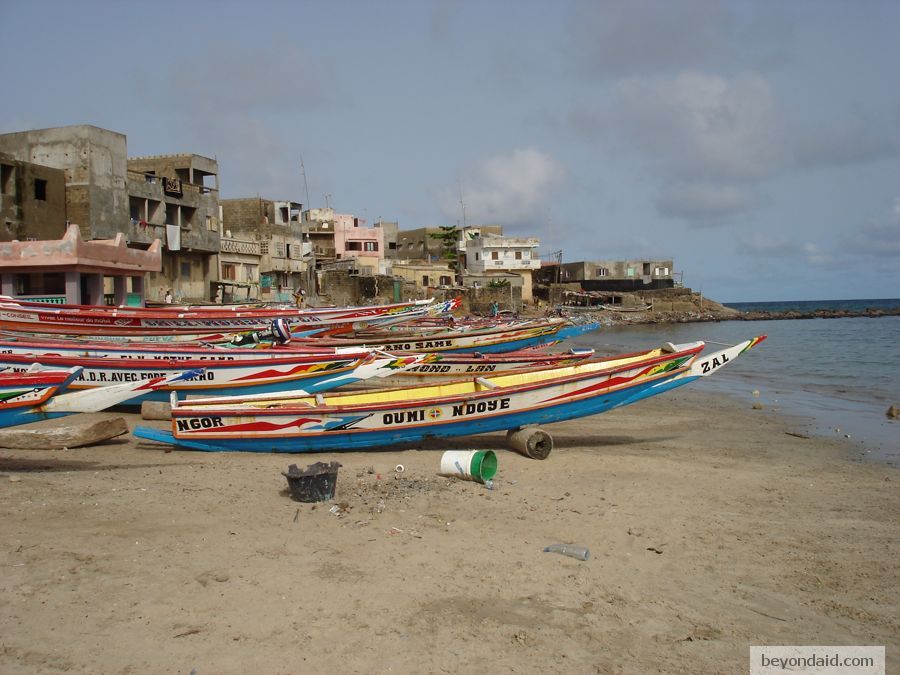
The Guardian quotes a Senegalese fisherman who suggests overfishing by foreign boats off Senegal’s coast will lead to violence if left unchecked.
“The catches are already down 75% on 10 years ago because of the foreign fishing boats. They destroy our gear. If this goes on there will be a catastrophe. Until now we haven’t taken any direct action against the foreign fishermen. Once we took the captain from one of the vessels and we beat him around the balls.
For sure, in 10 years time people will go fishing with guns. They are desperate. When people had enough to eat and drink, Senegal was a calm country. As the situation becomes more difficult it will become more and more like Somalia. We will fight for fish at sea. If we cannot eat, what do you expect us to do?”

New paradigm
The UN News Centre reports that UN Secretary General Ban Ki-moon has said a new economic model is necessary in order for sustainable development to become possible.
“ ‘Gross National Product (GDP) has long been the yardstick by which economies and politicians have been measured. Yet it fails to take into account the social and environmental costs of so-called progress,’ Secretary-General Ban Ki-moon said in his remarks at a high-level meeting at UN Headquarters in New York.

‘We need a new economic paradigm that recognizes the parity between the three pillars of sustainable development. Social, economic and environmental well-being are indivisible. Together they define gross global happiness,’ the Secretary-General told the meeting’s participants.”


Affirmative action ban
The Associated Press reports that a US federal court has upheld California’s ban on university admission policies that take race, ethnicity or gender into consideration.
“At least six states have adopted bans on using affirmative action in state college admissions. Besides California and Michigan, they include Arizona, Nebraska, Oklahoma, and Washington.
Advocates of affirmative action say such bans lead to the exclusion of minority students and less campus diversity.
In California, the year after ban was adopted, the number of black, Latino and Native American students at the University of California’s most prestigious campuses — Berkeley and Los Angeles — plummeted by 50 percent, according to the plaintiffs cited in the court opinion.”

Happy science
Columbia University’s Earth Institute has released the first edition of the World Happiness Report, in which it explains the “new science of happiness.”
“Over time as living standards have risen, happiness has increased in some countries, but not in others (like for example, the United States). On average, the world has become a little happier in the last 30 years (by 0.14 times the standard deviation of happiness around the world).”

EU transparency
The Tanzania Extractive Industries Transparency Initiative’s Bishop Stephen Munga argues that the EITI is useful but limited.
“It provides information at a national level, but does not enable communities to know how much wealth was generated in their locality and should therefore be returned to them. It is also voluntary. Governments decide whether to sign up. Only 35 have done so, leaving dozens of resource-rich countries with no publically available information.
This is why we need robust EU legislation revealing information at project level and published in all countries where EU companies work. Information must be relevant to local communities and attributed to the projects in their area. If not, legislation will simply not achieve its intended aim.”

Food racism
Le Monde reports on the debate in Austria over attempts to change traditional food names that “perpetuate racial prejudice.”
“The rightwing press was quick to jump on the story. Would it be necessary to change ‘Moor in a shirt’ to ‘Othello,’ asked the Kronen Zeitung tabloid, always eager to ridicule political correctness, while a commentator with the daily Die Presse slammed the ‘paternalistic lobby’ and the ‘professional indignants.’

‘Words are a key part of collective identity,’ counters SOS-Mitmensch’s Alexander Pollack. ‘And Austrians proved that by insisting, when they joined the EU, on keeping their own food names, notably for vegetables. If potatoes [erdäpfel in Austria, kartoffel in Germany] are taken so seriously here, the fight for human dignity and respect for others must be too.’” (Translated from the French.)