
Latest Developments, April 12

In the latest news and analysis…

Suppressing dissent
A letter signed by 49 former officials from the UN Conference on Trade and Development says wealthy countries are trying to silence the organization because its economic analyses provide an alternative to the views of Western-dominated institutions, such as the World Bank and IMF.
“No organisation correctly foresaw the current crisis, and no organisation has a magic wand to deal with present difficulties. But it is unquestionable that the crisis originated in and is widespread among the countries that now wish to stifle debate about global economic policies, despite their own manifest failings in this area.

So the developed countries in Geneva have seized the occasion to stifle UNCTAD’s capacity to think outside the box. This is neither a cost-saving measure nor an attempt to ‘eliminate duplication’ as some would claim. The budget for UNCTAD’s research work is peanuts and disparate views on economic policy are needed today more than ever as the world clamours for new economic thinking as a sustainable way out of the current crisis. No, it is rather – if you cannot kill the message, at least kill the messenger. ”

ICC reparations
IRIN reports that, following the International Criminal Court’s first-ever conviction last month, reparations for the victims has become a “thorny issue.”
“No other international criminal tribunal has ever awarded reparations, but under ICC rules, those who have suffered injury or harm from a crime for which someone is convicted could receive restitution, compensation or rehabilitation.

‘The ICC was initially thinking of symbolic reparations,’ [Witness’s Bukeni] Waruzi said. ‘They were saying something like building a statue in the village that will really honour the victims. But reparations cannot be symbolic, because the crimes were not symbolic. It is now for the ICC to take full responsibility, to actually manage the expectations.’ ”

Spanish integration
Inter Press Service reports Spain’s latest national budget has cut off all funding for “social insertion, employment and education programmes” for immigrants to the debt-ridden country.
“SOS Racismo predicts that the disappearance of the fund will paralyse ‘hundreds of municipal and regional integration plans,’ and said its removal contravenes European Union agreements, such as the European Agenda for the Integration of Third-Country Nationals, established in July 2011.
According to SOS Racismo, ‘economic crises have different timescales to those needed to evaluate the extent of integration of an immigrant population that in recent years has seen its employment and family expectations frustrated.’ ”

Phasing out executions
Human Rights Watch says that five American states abolishing the death penalty in five years is a “clear sign” of the growing momentum against capital punishment in the US.
“Since 2007, the death penalty has been eliminated in New Jersey, New York, New Mexico, and Illinois. After Connecticut joins them, 17 US states will have rejected capital punishment.  Thirteen states that have the penalty on the books have not used it for at least five years. Challenges to the death penalty are also being mounted in California and Maryland.”

Big-box hate
The Atlantic reports on a new study which found a correlation between the presence of big-box stores and hate groups in communities across the US.
“Before anyone gets too worked up, the study’s authors aren’t saying that Walmarts cause hate groups to form (they’re also using Walmart here as a stand-in for all big box stores; Target merely got off the hook in the study headline). Rather, this research suggests national mega-stores like Walmart may fray the social capital in a community – by disrupting its economy and displacing the community leaders who run local businesses – in ways that enable hate groups to take hold.

Of all the variables [the study’s authors] looked at, the number of Walmarts in a county was the second-most significant predictor of the presence of hate groups, behind only the designation of a county as a Metropolitan Statistical Area, or in other words an urban one.”

Private aid
Global Humanitarian Assistance has published a new report on the increasing privatization of humanitarian and development assistance, and some of the transparency issues associated with this trend.
“While global private support to large-scale emergencies is relatively easy to gauge, it remains unclear how much private money is out there in any given year. While the absence of dedicated tracking mechanisms for this type of financing certainly does nothing to improve clarity, it is the lack of consistent reporting on the income and expenditure of private aid funding globally that makes any attempt at tracking it a near impossible mission.

If tracking total private voluntary contributions for humanitarian aid is a challenging task, gauging where this private money goes is an even more difficult enterprise. Very few humanitarian organisations report their private country or sector expenditure separately from their overall funding allocation.”

Drug-war addiction
The Universidad de Di Tella’s Juan Gabriel Tokatlian hopes the Obama administration’s appointment of a new “drug warrior” for Latin America and the Caribbean will mean a change of American tactics in the region.
“And, throughout Latin America, the situation has only worsened since the 1990’s. Indeed, Latin American countries’ US-backed fight against drugs has had universally destructive consequences in terms of civil-military relations, human-rights violations, and corruption.

The military and political challenges are significant, the risks are considerable, and the benefits are uncertain. But if [United States Southern Command] does not implement major changes in how it prosecutes the drug war, the US will find itself facing an increasingly volatile and dangerous set of neighbors to the south.”

Extractive politics
OpenOil’s Johnny West argues the extractive industry is inherently more political than other forms of business and any attempts to regulate it must take this feature into account.
“Once you recognise rent as the essence of the global oil and the mining industries, you must recognise that everything about them is as much political, and geo-political, as it is economic. That is how historically mismanagement of those industries has led to such massive corruption and conflict. Nobody ever went to war over car manufacturing or internet service provision. When it comes to bananas or silicon chips, or intellectual copyright, the term ‘trade war’ is, thankfully, a metaphor.

With oil, business is politics and politics is business, whatever anyone says. Technocratic solutions can only pick up where broader political questions have been settled.”
Latest Developments, March 27

In the latest news and analysis…

Red Cross hotel
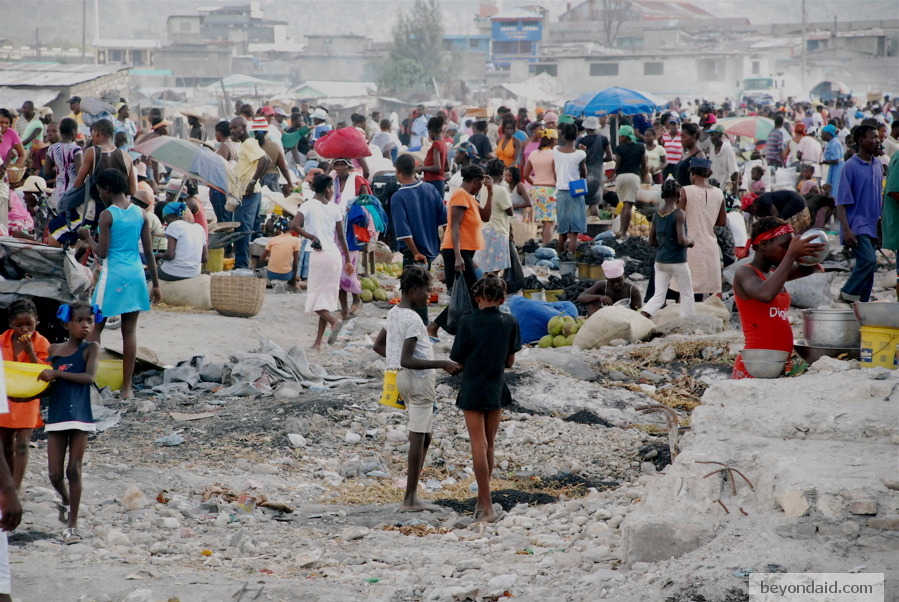
The Center for Economic and Policy Research questions Red Cross priorities as the humanitarian organization considers building a luxury hotel and conference center on Port-au-Prince land it bought with Haiti earthquake relief funds.
“Considering the hundreds of people who have recently been forcibly evicted – with some recently having been burned out of their camps in suspicious arsons – couldn’t this be space that the Red Cross could offer them, rather than using it for a commercial venture that might not even be viable?
The Red Cross’ post-quake spending and use of funds, as the largest NGO operating in Haiti, has been controversial almost since the beginning. News that some ‘funds donated by national Red Cross agencies for quake recovery’ – much of which almost certainly came from individuals who believed their money would be used for emergency relief – might instead be used for a risky commercial venture (and one that caters to NGO’s and tourists) could provoke more controversy.”

Mosque outreach
The American Civil Liberties Union reports it has obtained documents indicating the FBI used a “mosque outreach” program to gather intelligence on American Muslim groups and their members “without any suspicion of wrongdoing.”
“The documents also show that the FBI categorized information about American Muslims’ First Amendment-protected and other entirely innocuous activities, as well as mosque locations, as ‘positive intelligence’ and disseminated it to agencies outside the FBI. As a result, the agency wrongly and unfairly cast a cloud of suspicion over innocent groups and individuals based on their religious beliefs and associations, and placed them at risk of greater law enforcement scrutiny as potential national security threats. None of the documents indicate that the FBI told individuals interviewed that their information and views were being collected as intelligence and would be recorded and disseminated.”

Suspicious skin
The Global Post reports a German court has ruled that certain police can use the colour of a person’s skin as justification for demanding to see identification.
“However, judges ruled that skin color was reasonable grounds on which to carry out ID checks, since the train route in question is often used by illegal immigrants to enter Germany. Since police cannot check every passenger’s papers, they must select which people to ID based on their ‘border policing experience,’ the judgment said.
The officers are therefore allowed to make their choice ‘according to external appearance’ and without concrete grounds for suspicion, Agence France Presse reported.”

Drug talk
Former Mexican foreign minister Jorge Castañeda writes that the “failed war on drugs” will loom large in discussions at next month’s Summit of the Americas in Colombia.
“Recently inaugurated Guatemalan President Otto Pérez Molina, together with [Colombian President Juan Manuel] Santos and other heads of state, question today’s punitive, prohibitionist approach, owing to its enormous costs and meager results, and propose a different strategy: legalization.
Obama sent Vice President Joe Biden to Mexico and Central America a few weeks ago to forestall this trend, and he may have partly succeeded. Nevertheless, whereas only a smattering of political leaders and intellectuals advocated legalization in the past, nowadays officials are coming ‘out of the closet’ on drugs in droves. Those who used to say that they favored a debate on the issue now support legalization; those who opposed it now accept the need for debate; and those who continue to oppose legalization do so on moral, rather than rational, grounds.”

Crying foul
UN special rapporteur on the right to food, Olivier De Schutter, argues the international community must look at the big picture and get serious about accountability if sustainable development is to become a reality.
“What are framed as development policies often end up doing very little to help the most marginalised communities, and sometimes end up harming them. Meanwhile, the effects of genuine development policies can easily be overridden by industrial and infrastructural projects, trade agreements, and other external factors that tip the balance against small-scale farmers and fishers. It is therefore essential to be able to cry foul when missing policies, misguided policies, or the sum total of policies, work against sustainable development.”

Talk is cheap
Inter Press Service reports on a group of legal experts who are looking to hold world leaders to the promises they make at June’s Rio+20 sustainable development summit.
“ ‘We are really tired of declarations,’ Antonio Herman Benjamin, judge of the Supreme Court of Brazil, told an international gathering of legal experts here Monday. Despite some progress made since the 1992 Earth Summit held in Rio de Janeiro, Brazil, most governments have failed to fulfil their obligations.
As a result, the court has launched a new initiative to promote role of law in advancing sustainable development. It is known as the World Congress on Justice, Governance and Law for Environmental Stability.
The Congress’s scores of members from around the world include senior judges, prosecutors, legal scholars, auditors and development experts. They plan to focus on the problems and obstacles that hinder the implementation of multilateral environmental agreements.”

Immigration detention
Author Edwige Danticat writes in the New York Times that new US immigration guidelines recommend the bare minimum of human rights for detainees, more than 110 of whom have died in custody since 2003.
“The new [Immigration and Customs Enforcement] guidelines are not perfect. They do not offer, for example, alternatives to jail-like detention, even for unaccompanied minors, the elderly, the disabled or pregnant women. But they are a step forward. In addition to medical care, safe water and limited recreation, they also require that staff members not perform strip searches on detainees of the opposite sex and that detainees not be used for medical experiments or for clinical trials without informed consent. They will crack down on sexual assault by staff members, contract personnel or other detainees and suggest that victims of sexual abuse be given access to emergency medical treatment.”

Good intentions
Northeastern University’s Aziza Ahmed argues we must “interrogate the consequences of advocacy efforts,” however noble the cause may appear.
“First, anti-sex trafficking activism has an extremely negative impact on HIV programs. Sex workers are highly vulnerable to contracting HIV. A key victory for anti-sex trafficking organizations was the insertion of the anti-prostitution loyalty oath (APLO) into the US Leadership Act for HIV/Aids, TB, and malaria. This provision requires that organizations agree to oppose prostitution and sex trafficking. The APLO has the effect of disempowering sex worker organizations who refuse to sign on, shutting health services for sex workers, and alienating sex workers from public health programs.”

Latest Developments, February 29

In the latest news and analysis…

Pharma corruption
Reuters reports on global efforts to rein in corruption in the pharmaceutical industry, as multinational drug companies seek to expand their business beyond traditional markets.
“The drugs business is particularly exposed to corruption, Transparency International says: pharmaceuticals create vast opportunities for graft across both rich and poor countries. Its 2011 Bribe Payers’ Index ranks pharmaceuticals and healthcare 13th out of 19 industries on probity – a lower ranking than defense firms, though above mining and construction.

Over the past year eight of the world’s top 10 drugmakers – Pfizer Inc, Novartis AG, Merck & Co Inc, Sanofi, AstraZeneca, GlaxoSmithKline Plc, Johnson & Johnson and Eli Lilly & Co – have all warned that they may face liabilities related to charges of corruption in numerous overseas markets.
Investigations into potential wrongdoing by pharmaceutical firms cover activities in countries including Argentina, Brazil, Canada, China, Germany, Italy, Poland, Russia and Saudi Arabia, according to company filings. They also involve possible improper conduct of clinical trials, which are increasingly being run in lower-cost Asian or East European countries.”

Sustainable development?
The Gaia Foundation has released a new report that highlights the rate at which global extractive industries have grown over the last 10 years.
“For example, iron ore production is up by 180%; cobalt by 165%; lithium by 125%, and coal by 44%. The increase in prospecting has also grown exponentially, which means this massive acceleration in extraction will continue if concessions are granted as freely as they are now.

The rights of farming and indigenous communities are increasingly ignored in the race to grab land and water. Each wave of new extractive technologies requires ever more water to wrench the material from its source. The hunger for these materials is a growing threat to the necessities for life: water, fertile soil and food. The implications are obvious.”

Time limit
The Guardian reports the UK government plans to implement new rules that would require migrant workers earning less than £35,000 a year to leave after 5 years.
“Ministers hope changing settlement rights for skilled workers will put plans back on track to cut net migration from its current 250,000 a year to ‘tens of thousands’ by the next general election. They believe the £35,000-a-year earnings threshold will ensure only the ‘brightest and the best’ migrants settle in the UK. But critics say it will simply mean only the wealthy and the comfortable are able to come and live and work in Britain permanently.”

Power, Inc.
Foreign Policy’s David Rothkopf examines what it means to live in a world where large numbers of corporations have grown more powerful than most countries.
“Today’s corporations often conduct something very much like their own foreign policy. They launch active political advocacy campaigns, such as ExxonMobil’s lobbying to kill U.S. acceptance of the Kyoto Protocol. They undertake significant security initiatives, as in the company formerly known as Blackwater’s defense contracting during the Iraq war. They also provide health care, training, shelter, and other functions that states ought to but can’t or won’t provide.
The result is societies that are profoundly out of whack, with far too much power in the hands of massive, often distant corporate entities that are only accountable, fundamentally, to their shareholders. Meanwhile, the public is seeing that the increasingly weak institutions designed to give them a voice are unable to meet some of the most basic terms of the social contract, as the issues that need to be addressed are effectively beyond their jurisdiction.”

Remedy gaps
Haley St. Dennis of the Institute for Human Rights and Business argues the current US Supreme Court case pitting Nigerian plaintiffs against oil giant Shell is a “stark reminder” that voluntary corporate policies are not always enough to prevent environmental and human rights abuses.
“But clearly governments must be at the forefront in ensuring effective remedies. Under the state duty to protect, governments have an obligation to ensure access to justice through provision of effective judicial and non-judicial remedies accessible to all.

It is safe to say that whether or not the Supreme Court finds in favour of the Kiobel plaintiffs, the need for more accessible forums for national or international redress to answer grievances unable to be remediated locally will remain a priority on the public agenda. Given the high threshold of evidence involving international crimes, tort laws such as [the Alien Tort Claims Act] and similar international processes, though often arduous, offer more accessible options.”

The cost of complicity
In a Q&A with Embassy Magazine, the University of Massachusetts Amherst’s Léonce Ndikumana discusses African capital flight which, he says, “kills babies.”
“We then look at the linkages between external flight and external borrowing. Statistically we find that for every dollar that comes into Africa, between 40 and 60 cents comes out of the continent in the form of capital flight. Africa keeps 40 cents, but Africa is going to have to pay the whole dollar, because it’s the debt that they signed.

We emphasis the fact that capital flight is the result of mismanagement, corrupt management in Africa, but also complicity of foreign actors including banks that take this money being robbed from the continent and turn a blind eye and don’t ask any questions about a government official bringing a million to deposit.”

Creating new truths
J.D.M. Stewart, who teaches history at Toronto’s Bishop Strachan School, takes up the call issued by the Truth and Reconciliation Commission of Canada for the country’s students to be taught about the history of residential schools and their devastating impact on Aboriginal culture.
“As Mr. Justice Murray Sinclair, the TRC’s chair, wrote: ‘There is an opportunity now for Canadians to engage in this work, to make their own contributions to reconciliation, and to create new truths about our country.’ ”

Latest Developments, February 8

In the latest news and analysis…

Fortress Europe
Agence France-Presse reports the European Commission has rejected a Greek request for funds to help build a fence along the Turkish border in order to stem illegal immigration. “ ‘The commission has decided not to follow up the Greek request because it considers it pointless,’ Michele Cercone, a European Commission spokesman, told a news briefing. ‘Fences and walls are short term measures that do not solve migration management issues in a structural way.’ It is up to EU states to decide how to secure their borders, but they have to take into account ‘international obligations including the respect of migrants, human rights,’ Cercone said.”

Give me your tired, your poor…
Yahoo! News reports that increasingly harsh American immigration laws, such as Alabama’s controversial HB 56 which prohibits “business transactions” between undocumented migrants and the state, are impacting people’s ability to obtain food.
“Last month, Kansas kicked more than 1,000 mixed-status families off its food stamp program when it joined three other states in adopting a stricter food stamp eligibility policy. A low-income family of five made up of two undocumented parents and three citizen children now has to show that its income is close to the poverty level for a family of three–not a family of five–in order to access food stamps. This is intended to prevent illegal immigrants from benefiting from food stamps, but immigration advocates say it will leave citizen kids hungry.”

Mining audit
Reuters reports that Zambia plans to audit all the country’s mining projects in search of back taxes it estimates at between $500 million and $1 billion.
“According to UK charity Christian Aid, more than half of the copper Zambia exported in 2008 was destined for Switzerland, but according to Swiss import data almost none of this arrived and [mines minister Wylbur] Simuusa said this trend continued.
This raises a number of transparency issues and activists say copper exported to Switzerland on paper often fetches a lower price than it would if it was exported elsewhere.
‘Once it leaves, where does it go? We don’t have a clue,’ he said.”

World Bank and tax havens
The Task Force on Financial Integrity and Economic Development’s María José Romero writes about revelations that the majority of clients of the World Bank’s private sector arm, the International Finance Corporation (IFC), are using tax havens.
“According to a recent report by Danish NGOs DanWatch and IBIS, ‘57 per cent of the companies analysed in the IFC’s extrac­tives portfolio from 2010 have channelled their investment in developing countries through an intermediate hold­ing company in a tax haven.’ Additionally, ‘more than a third of the countries hosting [the] IFC’s extractive projects have no specific policies on thin capitalisation,’ which means that IFC’s extractive-industry clients can minimise tax payments in developing countries by injecting as much debt and as little equity as possible into their operating subsidiaries.

Civil society organisations have demanded changes in the IFC policy in order to ensure that investing in private sector companies has a positive impact on development.  According to Alvin Mosioma from Tax Justice Network, ‘the IFC should stop channelling public funds to companies using secrecy jurisdictions.’ To make effective and measurable progress towards financial transparency, the DanWatch report also recommends that ‘companies supported by IFC should present their annual accounts on a country-by-country and project-by-project basis, which would en­able host governments and civil society to iden­tify tax avoidance and evasion.’ ”

Resource scramble
A new Global Witness report suggests corruption and instability could worsen in Africa unless there is more transparency in the oil, gas and mining industries.
“Firstly, all companies involved in bidding rounds for oil licences, or that hold oil licences should fully disclose their ultimate beneficial owners. This level of transparency provides government and the public with the opportunity to begin to dispel suspicions that government officials may be benefitting illicitly from the allocation of oil licences. Additionally, the terms of all licences and contracts should be published to make it easier for the appropriate authorities and the public to determine that the terms of a contract are not unduly favourable to a company.”

Cynical aid
MiningWatch’s Catherine Coumans argues the Canadian International Development Agency’s decision to fund corporate social responsibility projects near mine sites is “intended to help Canadian mining companies compete for access to lucrative ore bodies in developing countries” where local opposition to mining is growing.
“Subsidizing the CSR projects of well-endowed multinationals is an irresponsible use of public funds by CIDA, particularly as these CSR projects mask rather than address the serious local- and national-level development deficits caused by mining.
If the Canadian government were interested in addressing the negative impacts of mining on development it would have implemented the recommendations of the parliamentary report of 2005 and the CSR Roundtables of 2007.”

Planning ahead
The Inter Press Service reports the Sierra Leone Conference on Development and Transformation has drafted a 50-year plan for the West African nation and intends to submit it to the country’s parliament.
“Many of the communiqué’s recommendations for improving the economy differ from the growing push towards increased foreign investment in mining, instead focusing on the long-term benefits of health, education and infrastructure. In fact, it suggests that no new mineral extraction agreements should be made by the government without first conducting a public comprehensive analysis of the quantity and amount of the resources to be exploited.
‘We’ve had a system that was not set up for a rapidly growing economy that would be prosperous, it was a system set up to ensure we have a quite country where resources could be extracted with us saying very little,’ said [the conference’s national coordinator Herbert] McLeod. ‘The exploitation of these resources could continue to have dangerous consequences if they are not managed well. You could have an already unequal society become more unequal as the benefits accrue to only a small section of the population.’ ”

Pot and kettle
The Overseas Development Institute’s Jonathan Glennie argues that for all the Western criticism of China’s activities in Africa, Chinese behaviour is “more or less” the same as that of other major donors.
“All in all, Chinese aid to Africa is going to come with all sorts of strings attached, despite the ‘no-conditionality’ rhetoric, and it is a huge power play, despite the proclamations of ‘south-south co-operation’. There will be problems, but no more or less than with the more traditional donors; just different, on account of different attitudes and modalities.”

Latest Developments, January 20


In the latest news and analysis…

The value of nature
The Guardian reports on a new study that argues some of the world’s poorest people should be paid $500 billion a year for the service they provide by preserving natural habitats.
“Many of the benefits of conservation, so-called ‘ecosystem services’, are invisible – for instance, maintaining wooded land can help to prevent mudslides during heavy rainfall, and provides valuable watersheds that keep rivers healthy and provide clean drinking water, as well as absorbing carbon dioxide from the air. These benefits are not assigned an economic value, however, so that chopping down trees or destroying habitats appears to deliver an instant economic return, when in fact it is leading to economic losses that are only obvious when it is too late.”

Hunger games
The World Development Movement’s Innocent Sithole writes about a new report on the role of European banks and private finance in food speculation and “land grabbing.”
“Our report identifies the biggest culprits in food speculation as Deutsche Bank, Barclays, the Dutch pension fund ABP, the German financial services group Allianz and French banking group BNP Paribas. We have since nominated Barclays for the 2012 Public Eye ‘shame’ awards for its financial speculation in food prices. Barclays is estimated to make up to £340 million a year from speculating in food ‘futures’ markets, making it the biggest UK player in the markets.”

Politics of xenophobia
Yahoo! News reports on the “hard line” taken by Republican presidential hopefuls on both legal and illegal immigration in the lead-up to the South Carolina primary.
“In talking about reducing legal immigration, Santorum–intentionally or not–aligned himself with the group NumbersUSA, which is spending up to $150,000 in South Carolina to run TV ads that criticize the federal government for admitting what the group considers to be too many legal immigrants each year.

Both legal and illegal immigration streams to America have fallen sharply since the recession began in 2008, even as state legislatures have increasingly passed immigration-related laws over the same period.”

Lethal policy
The University of Notre Dame’s Mary Ellen O’Connell argues America’s increasing use of “targeted killings” – a tactic it publicly opposed in the early years of the George W. Bush administration  – runs counter to its stated goal of promoting a “just and sustainable international order where the rights and responsibilities of nations and peoples are upheld, especially the fundamental rights of every human being.”
“The US did not support such killing for fundamental reasons of law and morality. Fundamental principles of law protect the human right to life and due process of law. Unlike torture, which is never permitted, states are permitted to allow designated authorities to carry out the use of lethal force in certain limited situations. In situations of armed conflict hostilities, lawful combatants will not be prosecuted for killing that complies with international humanitarian law. Today, under the international legal definition of armed conflict, the United States is involved in such hostilities in one country only: Afghanistan.
Beyond Afghanistan, any use of lethal force by designated authorities of the United States must follow the normal human rights limits on peacetime resort to lethal force. Authorities may engage in lethal force when necessary to save a human life immediately, if there is no alternative. In other cases, an attempt to arrest is required, followed by a fair trial within a reasonable period.”

Green growth
Oxfam’s Kate Raworth looks into the extent to which G20 countries have succeeded in decoupling economic growth and resource use.
“The vast majority of high-income countries in the G20 have so far provided no evidence that they can make economic growth environmentally sustainable. Of course, most have barely started to put in place the policies required to make it happen – but delay will only make it harder. So what does the G20 evidence show? That absolute decoupling is possible (we’ve seen it!), at least for some of the countries, for some resources, for some of the time. But that’s a far cry from believing that environmentally sustainable GDP growth is possible everywhere, all the time, indefinitely.”

OccupyLSX
The Institute of Development Studies’ Alex Shankland writes about the “subversive ruliness” of Occupy the London Stock Exchange.
“The Occupiers are fully committed to non-violence, but also to using direct action and surprise tactics that may or may not involve breaking the law.
So far, so unruly. But I would argue that paradoxically the real significance of the model of contestation provided by the camp lies not in law-breaking, but in rule-making. Transparent, rule-bound behaviour is absolutely central to the political practices that characterise OccupyLSX. This, in turn, is central to the unique power of the challenge that it poses to the intermingled political and financial interests whose unruly, untransparent and often downright illegal practices have left their disastrous mark both on London and on communities across the world.”

Ecuadorean example
Jawaharlal Nehru University’s Jayati Ghosh argues that in the space of a few short years, Ecuador has gone from a “basket case” to a development example for the world.
“All this may sound too good to be true, and certainly the process of transformation has only just begun. There are bound to be conflicts with those whose profits and power are threatened, as well as other hurdles along the way. But for those who believe that we are not condemned to the gloomy status quo, and that societies can do things differently, what is happening in Ecuador provides inspiration and even guidance. The rest of the world has much to learn from this ongoing radical experiment.”

Fear of debt
Robert Skidelsky, a member of the British House of Lords, argues there are a number of logical flaws to the prevailing thinking that debt reduction through “fiscal consolidation” is necessary for countries to enjoy healthy, sustainable economies.
“Third, the national debt is not a net burden on future generations. Even if it gives rise to future tax liabilities (and some of it will), these will be transfers from taxpayers to bond holders. This may have disagreeable distributional consequences. But trying to reduce it now will be a net burden on future generations: income will be lowered immediately, profits will fall, pension funds will be diminished, investment projects will be canceled or postponed, and houses, hospitals, and schools will not be built. Future generations will be worse off, having been deprived of assets that they might otherwise have had.”