Latest Developments, April 10

In the latest news and analysis…

Inequality warning
The BBC reports that the Asia Development Bank is warning that growing inequality – particularly in China, India and Indonesia – could threaten the continent’s stability.
“During the 1960s and 1970s, Asia was better at ensuring that growth did not marginalise large chunks of the region’s population and was actually reducing the gap between the rich and the poor.
However, over the past decade the sudden explosion of growth and rapid enrichment of many people has seen the rich-poor divide grow. The ADB estimates that currently in most Asian countries the wealthiest 5% of the population now account for 20% of total expenditure.
At the same time, for hundreds of millions of people access to education, healthcare and housing has become more difficult and expensive.”

Hijacking democracy
The Independent reports that two of Britain’s top lobbying firms are offering to help corporate clients benefit from the European Citizens’ Initiative, which is intended to increase public input into EU lawmaking.
“A leaked memo shows that Bell Pottinger, the subject of an undercover investigation published in this newspaper in December last year, has offered to help potential clients set up petitions demanding changes to EU law under the new programme, whose rules specifically bar organisations from doing so.
And information posted on the website of its fellow lobbyist Fleishman-Hillard shows it too is offering to help businesses hijack the initiative, which came into force on 1 April.”

Inivisible Children leaks
RT reports that diplomatic cables published by Wikileaks suggest “collaboration” between the group behind the Kony 2012 video and Uganda’s intelligence services.
“A memo written by a public affairs officer at the US embassy in Uganda documents Invisible Children’s collaboration with Ugandan intelligence services. It notes that the US-based NGO tipped the Ugandan government on the whereabouts of Patrick Komakech, a former child soldier for the Lord’s Resistance Army (LRA), who was wanted by security officials for extorting money from the government officials, NGO’s and local tribal leaders. Ugandan security organizations jumped the tip and immediately arrested Komakech.

Invisible Children also actively supported Operation Lightning Thunder (OLT), a joint attack by Uganda, the Democratic Republic of Congo and the then-autonomous South Sudan against the LRA. The operation, which was also received US intelligence and logistical backing, killed more civilians than LRA militants.”

Sacred hills
The Guardian reports that the Dongria Kondh people’s “Avatar-like battle” against a UK-based mining company has reached India’s Supreme Court.
“Lingaraj Azad, a leader of the Save Niyamgiri Committee, said the Dongria Kondh’s campaign was ‘not just that of an isolated tribe for its customary rights over its traditional lands and habitats, but that of the entire world over protecting our natural heritage’.

A government report accused the firm of violations of forest conservation, tribal rights and environmental protection laws in Orissa, a charge subsequently repeated by a panel of forestry experts.”

Illegal lumber
Inter Press Service reports on a new investigation that found more than 20 US companies had imported illegal timber from Peru’s Amazon region in recent years.
“ ‘Exporters in Peru and importers in the United States and around the world are currently integral parts of a systematic flow of illegal timber from the Peruvian Amazon. Sometimes intentionally, sometimes through sheer negligence, each of the actors and agencies involved in this system are working as gears in a well-oiled machine that is ransacking Peru’s forests and undermining the livelihoods and rights of the people that depend on them,’ the [Environmental Investigation Agency] report stated.
The investigation discovered at least 112 shipments of protected cedar and mahogany were illegally laundered with fabricated papers and imported by U.S. companies between 2008 and 2010.”

Complicity in genocide
Groupe Rwanda argues in Billets d’Afrique that the French government was complicit in the Rwandan genocide that started 18 Aprils ago.
“In fact, according to the jurisprudence of the International Criminal Tribunal for Rwanda (ICTR): ‘…an accused is liable for complicity in genocide if he knowingly and voluntarily aided or abetted or instigated a person or persons to commit genocide, while knowing that such person or persons were committing genocide, even though the accused himself did not have the specific intent to destroy, in whole or in part, a national, ethnical, racial or religious group, specifically targeted as such.’ In the name of geopolitical considerations dictated by a minority above all accountability due to the so-called ‘reserved domain’ of the head of state, French decision makers consented without qualms to the preparation and subsequent carrying out of the massacre of nearly a million human beings. Once the crime was completed, they did not break their alliance with the killers. François Mitterrand even said to his inner circle in the summer of 1994: ‘You know, in such countries, genocide is not too important.’ ” (Translated from the French.)

Judicial racism
The Guardian’s Gary Younge argues that incidents of judicial racism in the US and UK are not the result of “people simply going rogue.”
“All these perpetrators were reported to the authorities and – in the absence of massive public pressure and media exposure – all were cleared. Both systemic and systematic, the racism these incidents and statistics reveal is embedded within the judicial system itself, rendering it part of the problem rather than the solution. This goes beyond the parental to the political. For it is difficult to escape the conclusion that the state, as currently imagined and experienced, is simply not set up with the purpose of protecting the rights of black people – indeed quite the opposite. It seems to function with the specific intent of violating their rights.”

Skin whitening
India Real Time’s Rupa Subramanya looks into India’s $400 million market for skin-whitening products, including one whose ad promises to “make a woman’s vagina fairer.”
“But before this gets branded a uniquely Indian phenomenon, consider that ever since the craze for the Brazilian wax, skin whitening for your private parts has been a thriving industry in the U.S. and elsewhere for some time. There are skin whitening products for just about every orifice. These were invented and marketed in the West long before they came to India. Like Coca-Cola and many other consumer goods, they’ve arrived here a little later.
The premium on fair skin isn’t unique to India and the developing world.”

Latest Developments, April 9

In the latest news and analysis…

Cluster bomb blacklist
The Guardian reports that in an “unpublicised but co-ordinated move,” four major UK banks and insurance companies have blacklisted corporations that manufacture cluster munitions and landmines.
“The Guardian has learned that major firms such as Lloyds Banking Group (through its investment arm Scottish Widows), Aviva, the UK’s largest insurer, and the Co-op have imposed a blanket ban on holding shares in companies that make or supply cluster munitions, purging them from nearly all their share portfolios.
Royal Bank of Scotland has banned all new lending to the same companies, and is now reviewing its defence industry shareholdings. Similar action is being taken by all the firms to clear out shares in anti-personnel landmine manufacturers, following intense pressure from human rights campaigners.
The industry is operating two parallel ‘stop lists’, which cover a dozen arms companies involved in making or supplying cluster bombs and anti-personnel landmines, including the US defence companies Lockheed Martin and General Dynamics, and the South Korean industrial conglomerate Doosan.”

Bloody F1
Reuters reports on the “increasingly loud calls” for cancellation of the Formula One race scheduled later this month in Bahrain, whose regime continues to face regular protests.
“The governing International Automobile Federation FIA.L, commercial supremo Bernie Ecclestone and Bahrain organisers have all said the April 22 race is on.

FIA president Jean Todt is expected to be in China, as is Ecclestone, and there are likely to be a number of meetings in the Shanghai paddock – possibly up until as late as Sunday morning.
‘Friday has been the busiest day for protests in Bahrain so Saturday looks the most likely day for any emergency meeting (in Shanghai),’ commented one team member.
Last year’s Bahrain Grand Prix was repeatedly re-scheduled and then reluctantly cancelled by organisers due to the violence in the country.”

Unfair policy
Al Jazeera reports that Brazilian President Dilma Rousseff has complained to her American counterpart about the impacts of US monetary policy on the world’s poor.
“Rousseff said low interest rates and other expansionist policies in wealthy nations have created an excess of global liquidity, which in turn has the unintended effect of damaging growth in poorer countries such as Brazil.
She also raised concerns with Obama that sanctions against Iran could fuel tensions in the Middle East and cause a spike in oil prices, threatening the global economic recovery, sources told Reuters news agency on condition of anonymity.”

Hostile environment
The Arizona Daily Star reports on new efforts to find and identify the bodies of migrants who die in Arizona’s desert.
“According to the Pima County Forensic Science Center, in 2011 there were 117 unidentified migrants who died in the Southern Arizona desert.

‘After a while, I started thinking: “Why do we have to just wait for the bodies? Let’s go get them,” ’ [technology liaison for the Office of the Medical Examiner and the Mexican Consulate, Engel] Indo said.
Once or twice a month, Indo plans to take volunteers into the desert on daylong searches for bodies, bones and live people.”

Solidarity tax
Reuters reports that Morocco’s government has decided to implement a “solidarity fund tax” on corporations in order to tackle social inequalities.
“Proceeds from the new tax will help raise 2 billion dirhams ($235 million) for a social solidarity fund to develop poor areas in a country that has one of the widest wealth inequalities in the region and where protesters still take to the streets over poverty, joblessness and corruption.

The 2012 budget now provides for the imposition in 2012 of a tax equal to 1.5 percent of the net profit for firms that make between 50 million and 100 million dirhams in net annual gains, Finance Ministry and parliament officials said.
Firms with annual net profits above 100 million dirhams will be subject to a 2.5 percent tax on their net profit in 2012, they added.”

Construction problems
A Libyan activist writing under the pen name Layla Ibrahim takes issue with the international community’s approach to rebuilding her country.
“The EU is responsible for media and communications training, yet that is still to start. The company, IMG international, hired to do this, is still in the needs assessment phase, for which they require a couple of months. However even when it does start, none of the ‘experts’ are Arabic speakers, which means it is unlikely they’ll be able to help shape the scripts or articles to support our journalists.

As one diplomat said: ‘The EU just about works within the EU; it has no business operating outside. The interests of one European country in Libya are not going to be the same as another, so Libya will suffer from these conflicts of interests as they fight over the same pot.’
In the meantime, Libyan professionals who are desperate to help rebuild their country are being side-lined. Internationals will hire Libyans in the main as fixers/drivers/translators but not in key positions. They will pay vast sums for hotel bills and per diems but will quibble over dinars to hire local staff.”

Ashley Judd’s face
Actor Ashley Judd analyzes a culture in which enormous media attention is focused on a woman’s face that is perceived to have become “puffy.”
“That women are joining in the ongoing disassembling of my appearance is salient. Patriarchy is not men. Patriarchy is a system in which both women and men participate. It privileges, inter alia, the interests of boys and men over the bodily integrity, autonomy, and dignity of girls and women. It is subtle, insidious, and never more dangerous than when women passionately deny that they themselves are engaging in it. This abnormal obsession with women’s faces and bodies has become so normal that we (I include myself at times—I absolutely fall for it still) have internalized patriarchy almost seamlessly. We are unable at times to identify ourselves as our own denigrating abusers, or as abusing other girls and women.”

Latest Developments, April 5

In the latest news and analysis…

Kony 2012, part II
The Guardian reports that the London School of Economics’ Craig Valters believes the newly released sequel to Invisible Children’s mega-viral video fails to address the criticism against its predecessor.
“Again, there is plenty of talk of turning power on its head. A form of ‘revolution’ as Ocampo put it. Firstly, who is harnessing this power? It certainly isn’t local Ugandans, who barely feature in either film, and who (judging from press reports) do not like the film one bit. Secondly, the film makes no mention of the UPDF (who the US has funded and worked with closely) who have committed many human rights violations. Thirdly, the film-makers (given their affiliation with Ocampo) clearly want Kony tried by the ICC. But the ICC is itself highly politicised, and has been criticised for failing to go after more powerful actors who have also committed crimes.”

LRA response
A document has appeared online, purporting to be a response by the Lord’s Resistance Army’s “Peace Team” to the Kony 2012 video.
“[Invisible Children’s] continued role is, to help sanitize the murderous regime of the army republic of Uganda – and maximally demonize the armed guerrillas in Uganda including the LRA – by working to pile all that is discreditable on the guerrillas, who are only one of the parties in the wars that the army regime has waged against the people of Uganda – while exculpating the murderous military machine of the regime of the army republic from any and all blame.
The principal endeavor of the masters of the Invisible Children is however to divert the attention of the people of Uganda and world democratic opinion from focusing on the real problems that face our African people under the army republic of Uganda and the search for their necessary resolution.”

Debt suicide
Reuters reports that the suicide of a pensioner outside the Greek parliament has turned into “symbol of the pain of austerity.”
“The 77-year-old retired pharmacist, Dimitris Christoulas, shot himself in the head on Wednesday after saying that financial troubles had pushed him over the edge. A suicide note said he preferred to die than scavenge for food.
The highly public – and symbolic – nature of the suicide prompted an outpouring of sympathy from Greeks, who set up an impromptu shrine where he killed himself with hand-written notes condemning the crisis. Some protested at night, clashing with riot police who sent them home in clouds of tear gas.”

Blaming Apple
In a letter to the New York Times, former UN special representative for business and human rights, John Ruggie, writes that Apple “contributes directly” to the well publicized problems at its Chinese supplier factories.
“Imposing stricter conditions on suppliers alone isn’t going to solve this problem. The brands also have to acknowledge their role and change their own practices accordingly. All major brands that source their products overseas, including Apple, have supplier codes of conduct. The time has come for them also to consider codes of responsible ordering practices.”

Drone HQ
The BBC asks “what it means to wage war from afar” during its visit to a New Mexico base where American and British personnel control drones.
” ‘I think it’s only controversial in terms of the media – they will make it controversial,’ said [Squadron Leader “Dex”].
‘We train to operate a weapon system in exactly the same way we would train in a manned aircraft – and we do the same job.
‘So to us there’s nothing controversial about it. Through our training and our smart decisions we avoid collateral damage as best we can. All of our engagements, all of our missions are legitimate and legal.’ ”

Decolonizing the franc zone
Former African Development Bank executive Sanou Mbaye calls the CFA franc zone “a formula for perpetual mass capital flight” from Africa to France.
“The CFA franc’s fixed exchange rate is pegged to the euro and overvalued in order to shield French companies from euro depreciation. But the currency’s overvaluation also underlies the lack of competitiveness that curbs franc-zone countries’ capacity to diversify their economies, create added value, and develop. Scandalously, they still have to surrender 50% of their foreign-exchange reserves to the French Treasury as a guarantee of the CFA franc’s limited convertibility and free transfer to France.

It is no wonder that the franc-zone countries have been unable to catch up with the performance of neighboring economies, most of which are undergoing the most prosperous period in their history. Since 2000, sub-Saharan African countries’ annual GDP growth has averaged 5-7%, compared to 2.5-3% for the franc zone. This gap should encourage the franc zone’s member countries to reject their relationship with France.”

Vying for influence
The Financial Times’ Alan Beattie writes that the World Bank’s structural inequality runs deeper than the US monopoly over the institution’s presidency.
“Emerging markets also complain that the bank’s lending practices give advanced countries control over the institution’s policy that is disproportionately large given their financial contributions. Much of the surplus from the commercial loans arm, which lends to middle-income countries, is ploughed back into the bank to provide low-cost loans and grants to the poorest nations. But control over those recycled funds rests largely with rich countries, which donate money on top and hold about half the voting power over the entire budget.”

Mismeasuring wealth
The time has come to replace GDP with “new indicators that tell us if we are destroying the productive base that supports our well-being,” according to the University of Cambridge’s Partha Dasgupta and the International Human Dimensions Programme’s Anantha Duraiappah.
“The United Nations University’s International Human Dimensions Program (UNU-IHDP) is already working to find these indicators for its ‘Inclusive Wealth Report’ (IWR), which proposes an approach to sustainability based on natural, manufactured, human, and social capital.

The IWR represents a crucial first step in transforming the global economic paradigm, by ensuring that we have the correct information with which to assess our economic development and well-being – and to reassess our needs and goals. While it is not intended as a universal indicator for sustainability, it does offer a framework for dialogue with multiple constituencies from the environmental, social, and economic fields.”

Latest Developments, April 4

In the latest news and analysis…

Aid down
The Organisation for Economic Co-operation and Development announced that 2011 marked the first time in 14 years that aid from its member countries had decreased.
“In 2011, members of the Development Assistance Committee (DAC) of the OECD provided USD 133.5 billion of net official development assistance (ODA), representing 0.31 per cent of their combined gross national income (GNI). This was a -2.7 % drop in real terms compared to 2010, the year it reached its peak. This decrease reflects fiscal constraints in several DAC countries which have affected their ODA budgets.”

Transfer pricing
Reuters reports Brazilian tax authorities have announced new regulations regarding billions of dollars worth of intra-company trade by transnational corporations.
“Under new rules, the Brazilian units of companies such as Bunge, Cargill, Louis Dreyfus, Glencore and Noble must value transactions with overseas units of the same company using international price benchmarks, said Sandro Serpa, a top enforcement official at Brazil’s Federal tax authority.
The measures are aimed at ending “price manipulation” of inter-company imports and exports that allow multi-national companies to evade local taxes, he said.”

Landmine talk
Human Rights Watch points out that while the US has condemned Syria’s use of landmines, America has yet to join the ban on the weapons.
“The United States is not a party to the 1997 Mine Ban Treaty, which comprehensively prohibits antipersonnel landmines and requires their clearance and assistance to victims. Yet the US already follows most of the treaty’s key provisions and has condemned new use of landmines by others. On March 14, US Ambassador Susan Rice and the State Department both described reports of Syria’s use of antipersonnel mines on its borders with Lebanon and Turkey as ‘horrific.’

Until the current policy review is completed, the 2004 Bush policy remains in place, permitting the US to use self-destructing, self-deactivating antipersonnel mines anywhere in the world. In accordance with this policy, the US no longer uses antipersonnel mines that do not self-destruct – sometimes called ‘persistent’ or ‘dumb’ mines – anywhere in the world, including in Korea.”

Indigenous IP rights
The Washington Post reports that a DC-based law firm has launched a “first-of-its-kind practice” that combines intellectual property and human rights.
“Spearheaded by founding director and veteran attorney Jorge Goldstein, who specializes in health sciences, the pro bono practice aims to use patent and copyright laws to help indigenous groups in developing countries protect and leverage their right to native or regional intellectual property — such as medicinal plants, artwork and designs — that often get co-opted, patented and sold by multinational corporations, including pharmaceutical companies.”

Intervention doctrine
Manuela Picq, most recently a visiting professor and research fellow at Amherst College, draws a direct line between today’s political ethics and the 15th Century Vatican doctrine of discovery that called for enslavement of non-Christians and occupation of their lands.
“The discourse that rationalised the colonisation of the Americas in the sake of Christianity is the same that justifies protecting human rights in Iraq or privatising water supplies for the sake of development.

Dominant cultures continue to intervene in the autonomy of indigenous peoples. This continuum is proof that the doctrine of intervention did not die with formal processes of decolonisation, adapting to new zeitgeists like a chameleon.
The practice of conquest, more diverse than often assumed, needs to be reconceived as a global political challenge that concerns us all rather than as a mere cultural concern discussed in indigenous forums. It is the international system that is at stake. Universalism cannot be exported, much less imposed. It is a collective practice.”

White guilt
The Center for Global Development’s Charles Kenny writes that people in wealthy countries hold views that “would make [Rudyard] Kipling proud” and are “positively harmful” to both rich and poor countries.
“A recent study in Britain suggested that the dominant image of developing countries remains ‘malnutrition and pot-bellied young children desperate for help with flies on their faces.’ Perhaps that’s not surprising when a survey by journalist Marlon Miller looking at ten years of Africa coverage by major U.S. print media found the most common topic of articles was conflict, corruption, and crime. Or when well-intentioned efforts to mobilize support for famine relief or bringing war criminals to justice in Africa tend to emphasize the worst of the continent and play up the role of outsiders.”

Resultism
The Overseas Development Institute’s Jonathan Glennie criticizes the “limited nature of development inquiry” that tends to focus on results and cost effectiveness to the virtual exclusion of other considerations.
“So while the Bank’s own evaluators (generally reckoned to be well-equipped and relatively independent) say that 59% of country assistance strategies are completed satisfactorily, the really interesting question is how many of those helped the country rather than hindered it. While Bank advice has helped some countries achieve development, there is no doubt it has done the opposite in others – the evidence is overwhelming. That makes the 59% number meaningless in terms of what it tells us about actual poverty reduction. But it fulfils the requirement of being a number, and will therefore be used in countless powerpoint presentations.”

IFI criticism
Inter Press Service reports on calls by NGOs for international financial institutions, such as the World Bank and International Monetary Fund, to practice what they preach when it comes to transparency and accountability, and to alter their traditional policy prescriptions which critics deem harmful to the world’s poor.
“Other groups, such as the Europe Corporate Observatory, raise similar complaints against the Bank and the IMF, for supporting free trade agreements (FTAs) with developing countries, which obviously damage local public health initiatives and food provision.
The most salient case is the European FTA with India, slated to come into force this year, which would force the Indian pharmaceutical industry to cease producing inexpensive generic medications to treat contagious diseases such as HIV/AIDS, which most of the developing world is dependent on as a cheap alternative to patented drugs.”

Latest Developments, April 3

In the latest news and analysis…

Aid and inequality
New data suggest aid actually increases the gap between rich and poor in recipient countries, according to Helmut Schmidt University’s Dierk Herzer and the Kiel Institute’s Peter Nunnenkamp.
“All in all, there is little reason for being optimistic and expecting foreign aid to be effective in alleviating poverty in recipient countries even if it had no discernible average growth effects. Calls on donors to strengthen the conditionality of aid, focus on countries with less corruption and better governance, and prevent leakage by stricter monitoring and closer involvement of the poor in aid delivery are insufficient even if such measures help restrict local rent-seeking. Better accountability is also required on the part of donors. Aid agencies tend to ignore their own incentive problems which prevent aid from reducing inequality. Public outrage in the North about corruption in the South abstracts from the selfish aid motives that lead donors to favour rich local elites. Overcoming the gap between the donors’ rhetoric on pro-poor growth and inequality-increasing aid allocation is no easier than overcoming rent-seeking and leakage in the recipient countries.”

Beyond aid
War on Want’s John Hilary argues it is time to “move beyond aid in any discussion of social and economic justice” and calls for a “radical reorientation” of the global economy towards a system that is not stacked in favour of rich countries.
“Sadly, the millennium development goals agreed in 2000 drew attention away from this pressing agenda. By focusing on the symptoms of human poverty rather than its underlying determinants, the goals have arguably diverted attention from the real business of development. Reclaiming that agenda will be a key part of moving the debate forward beyond 2015.
But perhaps the greatest problem with aid is that it perpetuates the colonial myth that the countries of the global south require ‘our’ intervention to save them from themselves.”

Provoking piracy
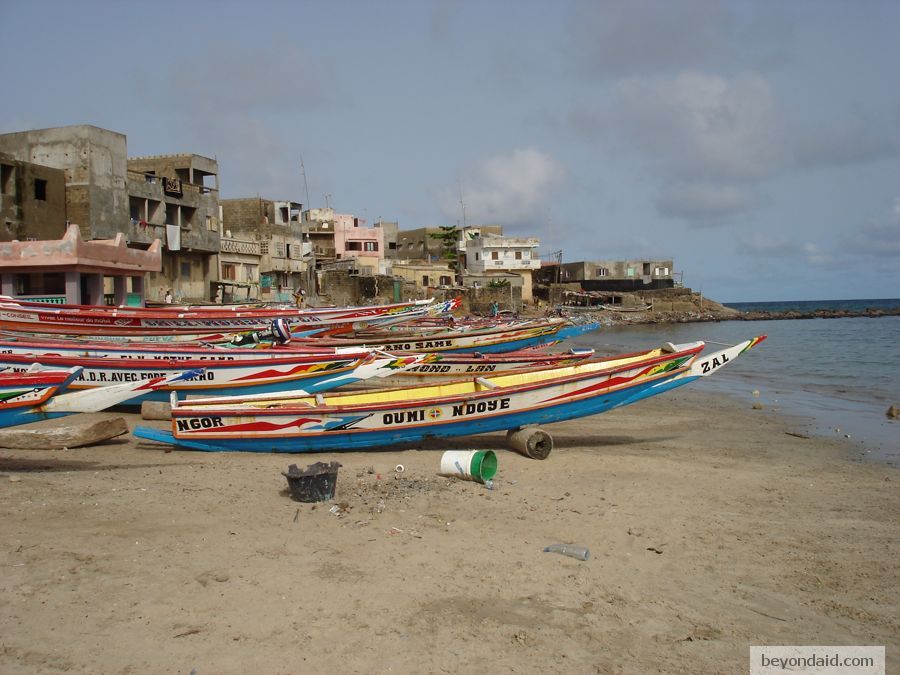
The Guardian quotes a Senegalese fisherman who suggests overfishing by foreign boats off Senegal’s coast will lead to violence if left unchecked.
“The catches are already down 75% on 10 years ago because of the foreign fishing boats. They destroy our gear. If this goes on there will be a catastrophe. Until now we haven’t taken any direct action against the foreign fishermen. Once we took the captain from one of the vessels and we beat him around the balls.
For sure, in 10 years time people will go fishing with guns. They are desperate. When people had enough to eat and drink, Senegal was a calm country. As the situation becomes more difficult it will become more and more like Somalia. We will fight for fish at sea. If we cannot eat, what do you expect us to do?”

New paradigm
The UN News Centre reports that UN Secretary General Ban Ki-moon has said a new economic model is necessary in order for sustainable development to become possible.
“ ‘Gross National Product (GDP) has long been the yardstick by which economies and politicians have been measured. Yet it fails to take into account the social and environmental costs of so-called progress,’ Secretary-General Ban Ki-moon said in his remarks at a high-level meeting at UN Headquarters in New York.

‘We need a new economic paradigm that recognizes the parity between the three pillars of sustainable development. Social, economic and environmental well-being are indivisible. Together they define gross global happiness,’ the Secretary-General told the meeting’s participants.”


Affirmative action ban
The Associated Press reports that a US federal court has upheld California’s ban on university admission policies that take race, ethnicity or gender into consideration.
“At least six states have adopted bans on using affirmative action in state college admissions. Besides California and Michigan, they include Arizona, Nebraska, Oklahoma, and Washington.
Advocates of affirmative action say such bans lead to the exclusion of minority students and less campus diversity.
In California, the year after ban was adopted, the number of black, Latino and Native American students at the University of California’s most prestigious campuses — Berkeley and Los Angeles — plummeted by 50 percent, according to the plaintiffs cited in the court opinion.”

Happy science
Columbia University’s Earth Institute has released the first edition of the World Happiness Report, in which it explains the “new science of happiness.”
“Over time as living standards have risen, happiness has increased in some countries, but not in others (like for example, the United States). On average, the world has become a little happier in the last 30 years (by 0.14 times the standard deviation of happiness around the world).”

EU transparency
The Tanzania Extractive Industries Transparency Initiative’s Bishop Stephen Munga argues that the EITI is useful but limited.
“It provides information at a national level, but does not enable communities to know how much wealth was generated in their locality and should therefore be returned to them. It is also voluntary. Governments decide whether to sign up. Only 35 have done so, leaving dozens of resource-rich countries with no publically available information.
This is why we need robust EU legislation revealing information at project level and published in all countries where EU companies work. Information must be relevant to local communities and attributed to the projects in their area. If not, legislation will simply not achieve its intended aim.”

Food racism
Le Monde reports on the debate in Austria over attempts to change traditional food names that “perpetuate racial prejudice.”
“The rightwing press was quick to jump on the story. Would it be necessary to change ‘Moor in a shirt’ to ‘Othello,’ asked the Kronen Zeitung tabloid, always eager to ridicule political correctness, while a commentator with the daily Die Presse slammed the ‘paternalistic lobby’ and the ‘professional indignants.’

‘Words are a key part of collective identity,’ counters SOS-Mitmensch’s Alexander Pollack. ‘And Austrians proved that by insisting, when they joined the EU, on keeping their own food names, notably for vegetables. If potatoes [erdäpfel in Austria, kartoffel in Germany] are taken so seriously here, the fight for human dignity and respect for others must be too.’” (Translated from the French.)